by | Apr 30, 2026 | Uncategorized
A child disappears into a fantasy novel for a reason. Sometimes they want dragons or secret doors. Sometimes they want a story that feels safe enough to hold something harder – loneliness, worry, money troubles, friendship struggles, or the quiet hope that life can change. That is where a strong middle grade fantasy novel review matters. It does more than say whether a book is fun. It helps families, teachers, and librarians spot the stories that offer wonder and emotional truth in the same breath.
For middle grade readers, fantasy is rarely just decoration. Magic can turn fear into something visible. It can give shape to questions kids are already carrying but may not know how to name. A cursed town, a mysterious library, a hidden world under ordinary streets – these are imaginative pleasures, yes, but they also create room for conversations about courage, belonging, and self-worth. When a review understands that balance, it becomes useful in a deeper way.
What a middle grade fantasy novel review should really look for
The best reviews of middle grade fantasy do not stop at plot. They look at how the story feels in a young reader’s hands and heart. A dazzling premise might catch attention, but staying power usually comes from character, emotional clarity, and a sense that the stakes matter beyond the magical quest.
That means asking a few simple questions. Is the world imaginative without becoming confusing? Are the characters acting like real kids, even in extraordinary circumstances? Does the story respect the emotional lives of readers ages 8 to 12 without talking down to them? And perhaps most importantly, does the fantasy deepen the story rather than distract from it?
Some books lean heavily into enchantment and adventure. Others bring in grounded social themes such as grief, poverty, family instability, or feeling out of place at school. Neither approach is automatically better. It depends on the reader. A child who wants pure escapism may not be ready for a fantasy novel with heavier emotional threads. Another reader may connect most strongly with a magical story that reflects real challenges and offers hope without pretending everything is easy.
Magic is only part of the measure
A common mistake in any middle grade fantasy novel review is giving too much weight to the fantasy system itself. Yes, children notice magical rules. They care whether a world hangs together. But young readers are often more forgiving than adults if a story gives them someone to root for.
What they tend to remember is the feeling. They remember the lonely child who finds one true friend. The uncertain hero who learns their voice matters. The ordinary place made luminous by possibility. If a fantasy novel delivers inventive magic but leaves its characters emotionally thin, it may earn admiration without love.
On the other hand, a quieter fantasy novel can become unforgettable if its emotional stakes are clear. A mysterious bookshop, a whispered spell, or a strange object with hidden power can be enough when the child at the center feels real. In middle grade fiction, emotional access matters. Readers want to imagine themselves inside the story, not just observe it.
Why grown-up gatekeepers read differently
Parents, teachers, librarians, and reviewers often come to fantasy with one extra question: what is this book inviting children to think about? That does not mean every novel needs a lesson stitched into the final chapter. Young readers can spot preaching from miles away. But adults do look for substance, especially when choosing books for classrooms, libraries, or shared reading.
This is where thoughtful reviewing becomes especially valuable. A strong review can identify whether a book handles difficult themes with care. It can note whether the emotional tone is reassuring, intense, funny, tender, or bittersweet. It can help adults judge reading level, discussion potential, and whether the story offers age-appropriate complexity.
For example, a fantasy novel that touches on housing insecurity or family stress may be deeply meaningful for one child and unexpectedly close to home for another. A good review makes space for that nuance. It does not flatten the book into either “important” or “entertaining,” because the best middle grade fiction is often both.
The strongest reviews pay attention to hope
Middle grade readers can handle more than they are sometimes given credit for. They can sit with uncertainty, loss, unfairness, and change. What they need is not artificial cheerfulness but a sense that the story believes in the possibility of light.
That is one of the clearest markers of a memorable fantasy novel for this age group. Even when the world is shadowed, there is still wonder. Even when a character is hurting, there is still movement toward connection, courage, or self-discovery. Reviews should notice that emotional architecture.
Hope in middle grade fantasy does not have to mean a neat ending. Sometimes it is as simple as a child realizing they are not powerless. Sometimes it is finding language for pain, or trusting a friend, or choosing kindness when fear would be easier. Those quieter victories deserve attention in reviews because they are often what young readers carry with them after the final page.
A close look at themes that matter
Fantasy has a special gift for approaching real-life struggles sideways. That can make hard subjects more approachable for children and more discussable for adults. A story about magic in a neglected town may also be about community. A child with an unusual gift may also be learning to live with difference, shame, or self-doubt.
When reviewing a middle grade fantasy novel, it helps to ask whether these themes feel earned. Are they woven naturally into the narrative, or do they feel attached from the outside? Is the child protagonist allowed to be a full person rather than a symbol of an issue? Stories resonate most when the emotional truths arise from character and plot rather than moral messaging.
This matters especially in books that blend fantasy with social realism. Done well, that combination can be powerful. It lets readers experience enchantment while still feeling the weight of ordinary life. It reminds children that wonder is not separate from hardship. Sometimes wonder is what helps us face it.
That blend is part of what makes books like The Book Witch stand out in conversations about middle grade fantasy. When a story holds both magic and real-world vulnerability, it can open doors for reflection without losing the joy of reading.
What young readers often notice before adults do
Children are quick to detect whether a book trusts them. They know when a voice sounds false. They know when a character’s choices feel forced. And they know when a story has that hard-to-define pull that makes them want just one more chapter.
Adults sometimes emphasize craft terms such as pacing, structure, or thematic layering. Those things matter. But many young readers begin somewhere simpler. Did the book make them feel curious? Did they care what happened next? Did they see something of themselves in the main character, even if the setting was magical?
The most helpful reviews keep both perspectives in view. They can speak to literary quality while staying close to the actual reading experience of a child. That balance is what makes a review not just informative, but trustworthy.
How to tell if a fantasy novel is worth recommending
A worthwhile recommendation usually rests on three things: imaginative appeal, emotional resonance, and reader fit. A book may be beautifully written but too slow for a child who craves momentum. Another may be wildly inventive but lighter on character depth. There is no perfect formula, only thoughtful matching.
That is why the strongest reviews avoid sweeping claims. Instead of saying a book is for everyone, they identify who is most likely to love it. Readers who enjoy magical libraries, hidden histories, and stories about finding strength in difficult circumstances may be drawn to one kind of fantasy. Readers looking for nonstop battles and high-stakes quests may prefer another.
Specificity helps. So does honesty about trade-offs. A gentler fantasy may move slowly but reward patient readers with warmth and heart. A darker fantasy may offer thrilling tension but need the right timing and support for more sensitive readers. Good reviewing respects those differences.
Why these reviews matter more than they seem
Choosing a middle grade fantasy novel is never only about filling reading time. For many children, books become rehearsal spaces for bravery, empathy, and hope. They offer language for feelings that can be difficult to say out loud. They create private companionship in seasons when life feels uncertain.
A thoughtful review helps place the right story into the right hands. That is no small thing. One well-chosen novel can spark a classroom conversation, steady a struggling reader, or remind a child that even in an ordinary world, there is room for wonder.
When we review middle grade fantasy with care, we are not just evaluating books. We are honoring the young readers who need stories that see them clearly, challenge them gently, and leave a little light behind.
by | Apr 28, 2026 | Uncategorized
A child who hesitates to talk about money problems, grief, loneliness, or feeling out of place will often talk about a cursed forest, a hidden key, or a girl who hears whispers from books. That is one reason teachers keep returning to imaginative stories. If you are wondering how to use fantasy in classrooms, the short answer is this: use it not as an escape from real life, but as a gentle, powerful way into it.
Fantasy gives students enough distance to be honest. A dragon, a spell, or a secret library can lower the stakes just enough for readers to ask hard questions. Who gets left out? What makes someone brave? What do we owe one another when life feels unfair? For upper elementary and middle grade students especially, that distance matters. It protects their tenderness while still inviting deep thinking.
Why fantasy belongs in real learning
Some adults still treat fantasy as extra credit for the imagination, pleasant but less serious than realistic fiction. In the classroom, that view misses what fantasy does so well. It helps students practice interpretation, infer rules, track cause and effect, and recognize symbolism. Those are core literacy skills, not decorative ones.
Just as importantly, fantasy helps children name emotional truths they may not have words for yet. A character carrying an invisible burden, entering a dangerous world, or discovering unexpected power often mirrors what young readers feel in ordinary life. Friendship struggles, family stress, social pressure, and questions of identity can all appear in magical form without losing their weight.
That is why fantasy works best when it is taught with respect. Students know the difference between a fun story and a meaningful one. When a teacher treats the genre as thoughtful literature, students usually rise to meet that expectation.
How to use fantasy in classrooms without losing focus
The strongest fantasy lessons start with intention. Before opening the book, it helps to ask what kind of thinking you want students to do. Are you focusing on theme, character growth, worldbuilding, symbolism, or discussion of real-world issues through story? Fantasy can support all of these, but not all at once.
For example, if your goal is close reading, choose a scene where the magical details reveal character or conflict. If your goal is social-emotional learning, choose a text where the fantasy elements reflect belonging, fear, courage, or resilience. If your goal is writing, use fantasy to help students imagine alternate worlds with rules, stakes, and consequences.
The mistake is not using fantasy. The mistake is using it only for decoration. A classroom dragon should not just roar. It should mean something.
Start with the human problem
Students connect most deeply to fantasy when they can identify the real feeling beneath the magic. A child in a magical story may be searching for a lost object, but underneath that quest might be grief, instability, or the need to be seen.
That makes a strong entry point for discussion. Instead of beginning with, “What magical elements do you notice?” try asking, “What is this character afraid of losing?” or “What does this world reveal about the people living in it?” Those questions lead students past surface-level wonder and into emotional understanding.
This is especially useful for middle grade readers, who are often ready for nuance but still appreciate the invitation of a vivid story world. They can hold both truths at once: the enchantment is real inside the story, and the feelings are real outside it too.
Let worldbuilding become a thinking tool
Fantasy worlds run on choices. Someone decides what has power, who has access to it, what rules exist, and who gets punished for breaking them. Those choices make worldbuilding a rich classroom tool.
Ask students why a fantasy world is organized the way it is. Who benefits? Who struggles? What fears shape the rules? Suddenly students are analyzing systems, not just settings. They are reading for power, justice, and consequence.
This also creates a natural bridge to writing. When students build their own fantasy worlds, ask them to create more than creatures and maps. Ask them to invent customs, limits, and moral tensions. A believable magical world does not need endless detail. It needs an internal logic that reflects something true about people.
Teaching empathy through fantasy
One of the quiet strengths of fantasy is that it invites empathy without sounding like a lecture. A child may resist being told to care about others, but they will often care deeply about a character trying to protect a sibling, hide a secret, or survive a world that misunderstands them.
This is where fantasy can become a meaningful conversation starter in classrooms. Students can discuss unfairness, class difference, exclusion, or family strain through the safe framework of story. They do not have to begin with themselves. They can begin with the character. Often that is enough.
For teachers, this means choosing books with emotional substance as well as imaginative pull. The best classroom fantasy does not only sparkle. It gives students something to wrestle with and something to hope for.
A story-led discussion might sound simple, but it can lead to remarkable honesty. A student who will not say, “I feel invisible,” might say, “The character feels invisible because nobody listens to her until she has power.” That is still insight. It still matters.
Where fantasy fits across subjects
Fantasy is often placed inside ELA alone, but it can support learning in other areas too. In social studies, students can compare fictional power structures to real governments or communities. In art, they can design symbols, maps, or objects tied to character and theme. In writing workshops, fantasy can strengthen revision because students must keep track of consistency, stakes, and point of view.
Even vocabulary work can feel more alive inside a magical text. Students are often more motivated to examine tone, figurative language, and connotation when the language itself feels charged with mystery.
That said, it depends on the classroom and the text. A fantasy novel with dense lore may inspire some students and overwhelm others. A whimsical story may charm one group but offer too little complexity for another. The fit matters. Fantasy is not automatically engaging just because it includes magic.
Choosing the right fantasy text
Not every fantasy book belongs in every classroom. Some are best for independent reading. Some work beautifully as read-alouds. Some support whole-class study because they pair vivid storytelling with clear thematic threads.
When selecting a text, it helps to look for three things: emotional clarity, age-appropriate complexity, and opportunities for discussion beyond plot. Students should be able to enjoy the adventure, but there should also be room to ask bigger questions.
For middle grade readers, stories that blend wonder with real challenges can be especially effective. They respect children’s imaginations while also honoring the reality of what many young people carry. That balance can be powerful in school settings, where students need both escape and recognition. Books in the spirit of The Book Witch often work this way, using magic not to erase hardship but to help readers face it with courage.
A few cautions that matter
Fantasy is rich, but it is not effortless. Some students need support tracking unfamiliar settings, invented terms, or layered plots. Pre-teaching a few concepts, modeling annotation, or using short passages before longer novels can help.
It is also worth watching for the assumption that all fantasy is harmless. Like any genre, it can carry stereotypes, uneven representation, or simplistic good-versus-evil frameworks. Those issues do not mean fantasy should be avoided. They mean it should be taught thoughtfully.
And while fantasy can open emotional doors, teachers should not force personal disclosure. Let the story do the inviting. Students should always have room to engage through ideas, characters, and craft rather than feeling pressured to share their own lives.
How to use fantasy in classrooms for lasting impact
The real goal is not to make every lesson magical. It is to help students see that imagination and understanding belong together. When fantasy is used well, students practice reading closely, thinking deeply, and feeling more generously toward themselves and others.
A child who follows a character through an enchanted world may come back to the ordinary one with sharper language for fear, hope, courage, and belonging. That is not a small outcome. It is one of the quiet gifts literature offers.
So if you bring fantasy into the classroom, let it be more than glitter. Let it be a bridge – from wonder to insight, from story to empathy, and from the page to the real hearts sitting in front of you.
by | Apr 26, 2026 | Uncategorized
A child wanders between library shelves looking for one good story, and somehow finds a doorway instead. That is the special pull of magical library stories for kids. They promise secret rooms, whispering books, and impossible adventures, but they also offer something quieter and just as powerful – the feeling that stories can help children make sense of their own lives.
For middle grade readers, that combination matters. Kids ages 8 to 12 are old enough to ask big questions about friendship, fairness, family, and who they are becoming. They still want wonder, but they also want stories that feel true in the heart. A library fantasy can do both at once. It can send a child into enchantment while keeping one foot planted in the very real world of school hallways, changing friendships, money worries, and the need to belong.
Why magical library stories for kids matter
The library itself is already close to magic in a child’s imagination. It is full of doors that look ordinary from the outside. One shelf holds a mystery, another a laugh, another a life that looks nothing like your own. Add a little fantasy, and the setting becomes even richer. A book might choose its reader. A librarian might guard ancient secrets. A forgotten corner might hold a map, a spell, or a second chance.
But the best magical library stories for kids are not only built on clever ideas. They understand what a library means emotionally. For some children, the library is a safe place after a hard day. For others, it is a place where they can feel capable, curious, and welcome. That emotional truth is what gives the fantasy weight.
A magical premise on its own can be fun for a chapter or two. What keeps readers turning pages is the sense that the magic is connected to something that matters. Maybe the main character feels invisible and finds a book that finally sees them. Maybe they are carrying fear at home and discover a world where courage grows one choice at a time. The enchantment works best when it reflects the child’s inner journey rather than distracting from it.
What makes a library story feel truly magical
A strong magical library story usually starts with tension, not glitter. Something is missing. A kid feels out of place. A family is struggling. A friendship is cracking. The library enters as a place of possibility, and then the story begins to widen.
That widening can happen in different ways. Sometimes the magic is hidden in the books themselves. Sometimes it lives in the building, with moving staircases, secret archives, or mysterious rules. Sometimes the magic is tied to a person who protects stories and understands their power. Each choice creates a slightly different reading experience.
If the books are magical, the story often feels intimate and imaginative. If the library building is magical, the world can feel expansive and adventurous. If a librarian or guide holds the secret, the story may carry a deeper sense of legacy, mentorship, and trust. None of these approaches is automatically better. It depends on the age of the reader, the emotional stakes, and how grounded the author wants the fantasy to feel.
The most memorable examples also treat reading as an act of courage. Opening a story becomes more than a pastime. It becomes a way to face loss, loneliness, or uncertainty. That is where these books can stay with children long after the final page.
The real-world heart inside magical library stories for kids
Adults sometimes assume fantasy is escapism and realism is substance. Children’s literature knows better. Fantasy can make difficult feelings easier to approach because it gives them shape. A locked room can stand in for grief. A cursed book can mirror shame. A hidden collection can represent hope that has been ignored but not lost.
This is especially true for middle grade readers. They are beginning to understand that the world is not always fair, yet they still believe change is possible. A magical library story meets them right there. It says yes, life can be hard. It also says help may come from unexpected places, and often from within.
That balance is delicate. If a story becomes too heavy, younger readers may feel overwhelmed. If it becomes too whimsical, the emotional core can disappear. The strongest books manage both tenderness and adventure. They trust children with honest themes while still giving them room to feel delight.
This is one reason educators, librarians, and parents are often drawn to these stories too. A well-written library fantasy can open conversations about resilience, self-worth, economic hardship, kindness, and community without sounding like a lesson. The child enters for the mystery and stays for the meaning.
What parents, teachers, and librarians should look for
Not every bookish fantasy will land the same way for every child. Some young readers want high-stakes adventure. Others want a gentler story with warmth and wonder. A few are ready for emotionally layered books that reflect real hardship. Knowing the reader matters as much as knowing the genre.
For ages 8 to 10, stories with a clear magical hook, accessible language, and a strong sense of safety tend to work well. These readers often enjoy rules they can quickly understand, a brave but relatable main character, and satisfying emotional payoff. They may love mystery, but they usually want reassurance that the world of the story still has order.
For ages 10 to 12, readers are often ready for more complexity. They can handle a little more ambiguity in the magic and more nuance in the emotional stakes. They may be especially drawn to stories where books and libraries are not only magical settings, but places where identity, belonging, and courage are tested.
Adults choosing magical library stories for kids should also pay attention to what kind of hope the story offers. Some books end in triumph. Others end in healing. Both can be valuable, but they feel different. A child going through a hard season may need comfort more than spectacle.
Why these stories keep getting passed from reader to reader
There is a reason library fantasies have such staying power. They celebrate reading without making it feel like homework. They honor quiet children, curious children, lonely children, and bold children. They suggest that knowledge matters, imagination matters, and ordinary places can hold extraordinary things.
They also create a lovely kind of recognition. The child reading in bed or in the back seat sees a character who also reaches for stories when life feels uncertain. That can be deeply affirming. It tells young readers that loving books is not small or strange. It is a kind of strength.
And because libraries belong to communities, these stories often carry a sense of shared hope. The hero may begin alone, but rarely stays that way. There are allies, helpers, protectors, and friends. In a time when many children are quietly carrying more than adults realize, that message matters.
A story about a magical library can still be funny, suspenseful, and full of twists. It should be. Wonder works best when it feels alive. But underneath the enchantment is a simple promise: you are not lost, and there may be more doors open to you than you think.
That promise is part of what makes stories like The Book Witch resonate with readers who long for both imagination and heart. When a book invites children into magic while honoring the real challenges they face, it becomes more than a passing adventure. It becomes a companion.
For young readers, that is often the truest magic of all. Not that a library shelf might swing open to reveal another world, though that is certainly lovely. It is that somewhere among the pages, a child may find courage, comfort, and the sense that their own story still has room to grow.
by | Apr 24, 2026 | Uncategorized
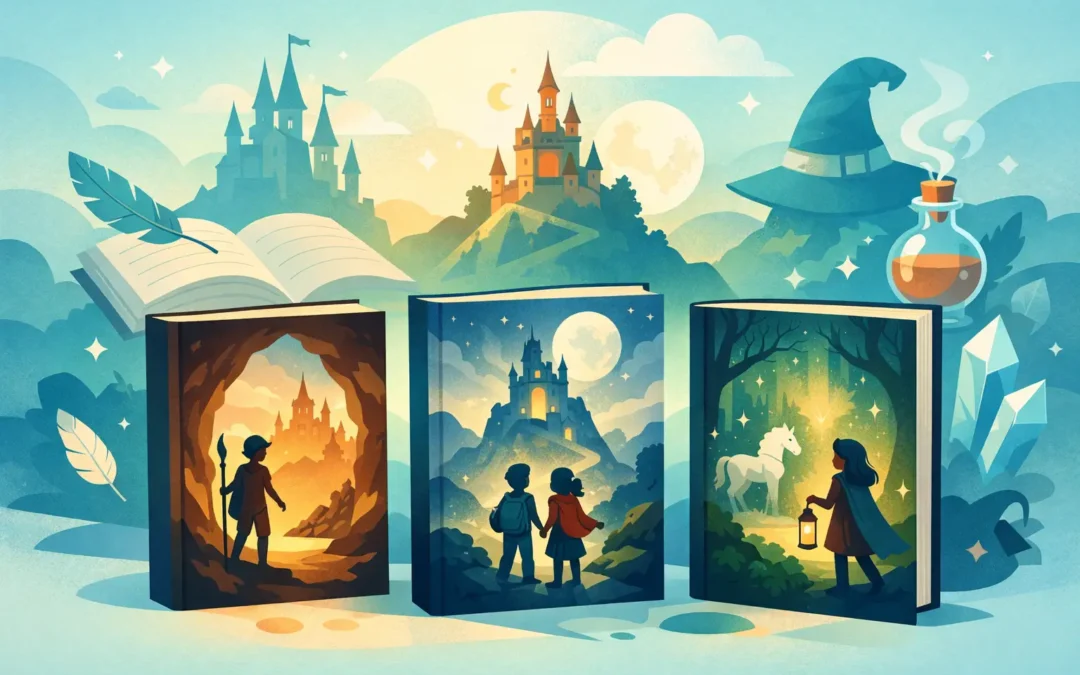
A child can walk past a hundred books and stop cold at one cover. That pause matters. In a crowded classroom library, a school book fair, or a quiet trip to the public library, middle grade fantasy book covers often make the first promise a story gives: there is wonder here, and it is meant for you.
For readers ages 8 to 12, a cover does more than look pretty. It signals tone, age range, emotional stakes, and the kind of adventure waiting inside. For the adults who help place books into young hands, it also hints at quality, care, and whether the story will meet children where they are. The best covers do both at once. They invite curiosity while building trust.
Why middle grade fantasy book covers matter so much
Middle grade readers are wonderfully honest. If a cover feels too young, they move on. If it feels too dark, too busy, or too much like a teen novel, they notice that too. They are looking for excitement, but they are also looking for themselves – for bravery that still feels believable, magic that brushes up against everyday life, and a story world they can step into without getting lost.
That makes this category especially interesting. Fantasy opens the door to impossible things, but middle grade keeps one foot on the ground. The strongest covers understand that balance. They offer enchantment without becoming abstract, and they suggest danger without becoming grim.
For parents, teachers, and librarians, the cover is often the first quick clue about suitability. Is this a playful adventure? A spooky mystery? A heartfelt story with magical elements and real emotional depth? A thoughtful cover helps answer those questions before the first page is turned.
The visual language of middle grade fantasy book covers
There is no single formula, and that is a good thing. Still, certain choices appear again and again because they speak clearly to this audience.
Color sets the emotional temperature
Color is one of the fastest storytellers on a cover. Deep blues, glowing golds, emerald greens, and rich purples often suggest mystery, magic, and nighttime adventure. Brighter palettes can signal humor, hope, or a lighter fantasy tone. Muted tones may point toward a more reflective story, especially one rooted in real-world challenges.
What matters is not simply whether a cover is bright or dark. It is whether the color feels emotionally honest. A whimsical story can carry shadows. A serious story can still shine. Young readers respond to that emotional clarity, even if they do not put it into those exact words.
Characters create instant connection
Many effective middle grade fantasy covers feature a child protagonist front and center, or at least clearly present within the scene. That choice gives readers someone to follow before they know the plot. It says, this is your guide. Come with them.
When a character appears on the cover, expression and posture matter. A brave stance can suggest action. A thoughtful look can hint at mystery or inner conflict. If the art captures vulnerability as well as courage, it often feels especially strong for middle grade, where emotional growth is just as important as external adventure.
Setting and symbols build intrigue
A lantern in a dark hall, a key glowing in a pocket, books swirling with light, a hidden doorway, a moonlit forest – fantasy covers often rely on a few carefully chosen visual clues rather than trying to explain everything at once. That restraint is part of the magic.
Children like having room to wonder. Adults appreciate when the imagery feels purposeful rather than cluttered. The best covers leave a question hanging in the air: What is happening here, and why do I want to know more?
What makes a cover feel truly middle grade
One of the hardest things in publishing is hitting the right age signal. A cover can be beautiful and still miss the mark if it reads as chapter book, young adult, or adult fantasy.
Middle grade usually lives in a visual middle space. The typography tends to be clear and expressive rather than severe or overly ornate. The imagery often has movement, immediacy, and emotional warmth. Even when the story includes danger or grief, the cover usually leaves room for hope.
That hopeful quality matters. Many children in this age group are ready for big feelings and real stakes, but they do not want to feel shut out by heaviness. A strong middle grade fantasy cover says, this story may challenge you, but it will carry you.
Covers that promise more than magic
Fantasy has always been a wonderful home for deeper truths. A child facing loneliness, instability, self-doubt, or change may find those experiences reflected through spells, secret worlds, and impossible quests. When a cover quietly holds both wonder and weight, it can be especially powerful.
This is where nuance matters. A cover for a story with emotional realism should not hide that depth completely, but it should not flatten the book into seriousness either. The visual promise should feel balanced. Wonder can sit beside hardship. Beauty can exist alongside uncertainty.
For books that explore friendship, resilience, belonging, or family struggle through a magical lens, the most memorable covers often suggest both the dream and the heartache. That combination helps the right readers find the book – and helps adults recognize that the story may open meaningful conversations.
Trends can help, but they are not the same as timelessness
Publishing always has visual trends. At one moment, silhouetted figures may dominate. At another, hand-lettered titles or highly detailed illustrated scenes may feel everywhere. Paying attention to trends can help a book look current, but chasing them too closely can also date a cover quickly.
Timeless middle grade fantasy book covers usually do something simpler. They know exactly what feeling they want to leave behind. Maybe it is wonder. Maybe it is courage. Maybe it is the hush before a secret is revealed. If that feeling lands, the cover has a much better chance of lasting beyond the season.
This is one reason illustrated covers continue to work so well in middle grade. Illustration can hold realism and imagination in the same frame. It can soften difficult themes while keeping them visible. It can also create a distinct personality that photography often struggles to achieve for fantasy in this age group.
What adults notice that kids may not name
Young readers often choose instinctively. Adults tend to read the same cover differently. They notice whether it looks professionally made, whether the design seems thoughtful, and whether the promise of the cover matches the values they want in a book.
That does not mean adults and children want opposite things. In many cases, they are responding to the same strengths. A cover that feels emotionally true, visually inviting, and age-appropriate works across both audiences. The child sees adventure. The adult sees care. Both are important.
For educators and librarians in particular, covers can shape recommendation confidence. A strong cover suggests that the reading experience has been crafted with intention. It signals that this book understands its audience and respects them.
Why the best covers linger in memory
Think about the middle grade fantasy covers you remember years later. Chances are, they did not only show a magical object or a dramatic scene. They captured a feeling that stayed with you. A little loneliness. A spark of courage. The thrill of stepping toward the unknown.
That is what great design can do. It gives a story a face before the first chapter begins. It creates a quiet emotional bond between the book and the reader. And for children especially, that first bond can be the difference between a book that stays on the shelf and a book that gets carried everywhere.
A story like The Book Witch lives in that tender, enchanted space where books, magic, and hard-earned hope meet. Covers for stories like this have a special job. They need to whisper adventure while making room for heart.
The most effective middle grade fantasy cover is not the loudest one in the room. It is the one that makes a child feel seen, makes an adult feel confident, and makes both of them want to open the book and begin.

by | Apr 23, 2026 | Uncategorized
A great middle grade fantasy novel usually gives young readers two gifts at once – a world they want to enter and a truth they can carry back out. That is exactly why middle grade fantasy books 2026 are already drawing so much interest from parents, teachers, librarians, and kids who want stories with real heart behind the magic.
For readers ages 8 to 12, fantasy is rarely just about spells, creatures, or hidden doors. It is often about courage when life feels shaky, friendship when belonging is uncertain, and imagination when the real world feels bigger than you expected. The strongest books in this space understand that children do not need shallow escapism. They need wonder with weight.
What middle grade fantasy books 2026 readers will want most
If recent reading trends tell us anything, it is that young readers are looking for fantasy that feels emotionally true. Big magical stakes still matter, of course. Secret societies, enchanted libraries, cursed objects, impossible maps, and talking creatures will always have a place on the shelf. But increasingly, the books that stay with readers are the ones where the magic is tied to something deeply human.
That might mean a character using imagination to cope with grief. It might mean a magical quest shaped by poverty, family change, loneliness, or self-doubt. It might mean a child discovering power not because they were chosen by destiny, but because they kept going when things were hard. That shift matters. It gives fantasy more staying power in classrooms, libraries, and bedtime reading alike.
Adults who buy books for kids are paying attention to this balance. They want stories that feel exciting enough to hook a reluctant reader, but meaningful enough to start a conversation afterward. When fantasy can offer both, it becomes more than entertainment. It becomes a bridge between joy and empathy.
The themes likely to shape middle grade fantasy books 2026
One of the clearest patterns in current middle grade publishing is the blending of imaginative settings with grounded emotional realities. Readers still love magical schools and hidden realms, but they also respond to stories where the main character is dealing with something recognizable at home or at school.
Magic with emotional realism
This is where the genre feels especially alive. A child might discover a mysterious inheritance, a haunted bookshop, or a strange power linked to stories themselves. Yet underneath the fantasy plot, the real struggle may be trust, instability, friendship, or finding your place in a changing world. The magic works because it reflects the character’s inner life instead of distracting from it.
For parents and educators, this kind of storytelling offers an added gift. It creates room to talk about difficult subjects gently. A fantasy novel can make room for conversations about fear, money worries, bullying, family stress, or confidence in a way that feels safe and age-appropriate.
Hope without pretending life is easy
Children are perceptive. They know when a story oversimplifies pain, and they know when it respects their feelings. The best fantasy for this age group does not avoid struggle. It gives struggle shape, meaning, and a path through.
That does not mean every book needs to be heavy. Humor, adventure, and delight are essential. But the stories likely to stand out in 2026 will probably be the ones that let young readers feel brave without pretending bravery is effortless.
Community over lone hero myths
Another welcome shift is the move away from stories where one extraordinary child must save everything alone. Many of the most memorable middle grade fantasies now make room for found family, intergenerational friendships, neighborhood magic, sibling bonds, and unlikely teams.
That feels especially right for middle grade readers, who are still learning how much strength can come from being seen, supported, and believed in. A quest shared with friends often lands more deeply than a quest carried in isolation.
What adults should look for in middle grade fantasy books 2026
Children often choose books based on the cover, the premise, or that magical feeling of wanting to know what happens next. Adults tend to look one step further. They want to know whether a story is age-appropriate, emotionally wise, and worth handing to a child who may be navigating a lot already.
A good place to start is with the emotional center of the book. Ask what the fantasy is really about beneath the surface. Is it about belonging? Grief? Resilience? Family instability? Confidence? If the emotional thread is clear, the story usually has more depth than a collection of magical events stitched together.
It also helps to notice whether the stakes feel child-sized even when the world-building is big. Middle grade readers can absolutely handle danger and tension, but they connect best when the character’s heart is still the true center of the story. Saving a kingdom is exciting. Saving a friendship, finding a voice, or learning your worth often matters even more.
Librarians and teachers may also want books that invite discussion without sounding teachy. That is a delicate balance. The strongest novels do not lecture. They trust the story. They let readers feel first, then think.
What young readers still love most
For all the conversation about trends, it is worth saying something simple: kids still want a story that feels magical from page one. They want mystery. They want surprise. They want a world with rules to learn and secrets to uncover.
They also want characters who feel like real kids, not miniature adults. A middle grade protagonist should be curious, imperfect, funny, stubborn, scared, loyal, and capable of growing. Young readers can tell when a voice feels authentic, and that authenticity matters just as much as the fantasy elements.
In 2026, books that combine wonder with warmth are likely to have the strongest pull. Think stories where books and libraries hold power, where ordinary places hide extraordinary truths, and where courage grows slowly instead of arriving all at once. Those are the kinds of tales readers return to.
Why this genre matters more than ever
Fantasy has always helped children name things that are hard to explain in plain terms. A curse can stand in for shame. A hidden room can represent hope. A magical object can carry memory, fear, or love. For middle grade readers, that symbolic language is not abstract literary theory. It is often how stories help them process the world.
That is one reason this category continues to matter so much. At a time when many kids are carrying stress, uncertainty, and social pressure earlier than we might wish, fantasy offers more than escape. It offers perspective. It says that strange things can be survived. It says that help can appear. It says that even when life feels confusing, meaning can still be found.
That message feels especially powerful in books that pair enchantment with compassion. A story can be whimsical and still honest. It can be adventurous and still tender. For many families and educators, that is not a bonus. It is the reason they keep seeking out the genre.
A thoughtful way to choose middle grade fantasy books 2026 titles
If you are building a reading list for next year, it helps to think less about hype and more about fit. Some children want fast-paced quests and high stakes. Others prefer quieter magic, bookish mysteries, or stories rooted in everyday struggles. Neither is better. It depends on the reader.
For a child who loves imagination but needs emotional reassurance, choose fantasy with a strong thread of hope and connection. For a more confident reader who wants bigger world-building, look for layered plots with clear emotional anchors. For classrooms and libraries, stories that balance literary quality with accessibility are often the most widely loved.
And if you are searching for a book that can spark both wonder and meaningful conversation, look for one that trusts children with complexity while still leaving room for light. That blend is rare, but when it is done well, it stays with readers for years. K.L. Baxton’s storytelling sits in that space, where magic and real life meet and neither one diminishes the other.
The most memorable middle grade fantasy books of 2026 will not just offer portals, puzzles, or powerful spells. They will remind young readers that even in uncertain chapters, friendship matters, courage can grow, and hope is its own kind of magic. That is always a story worth placing in a child’s hands.