
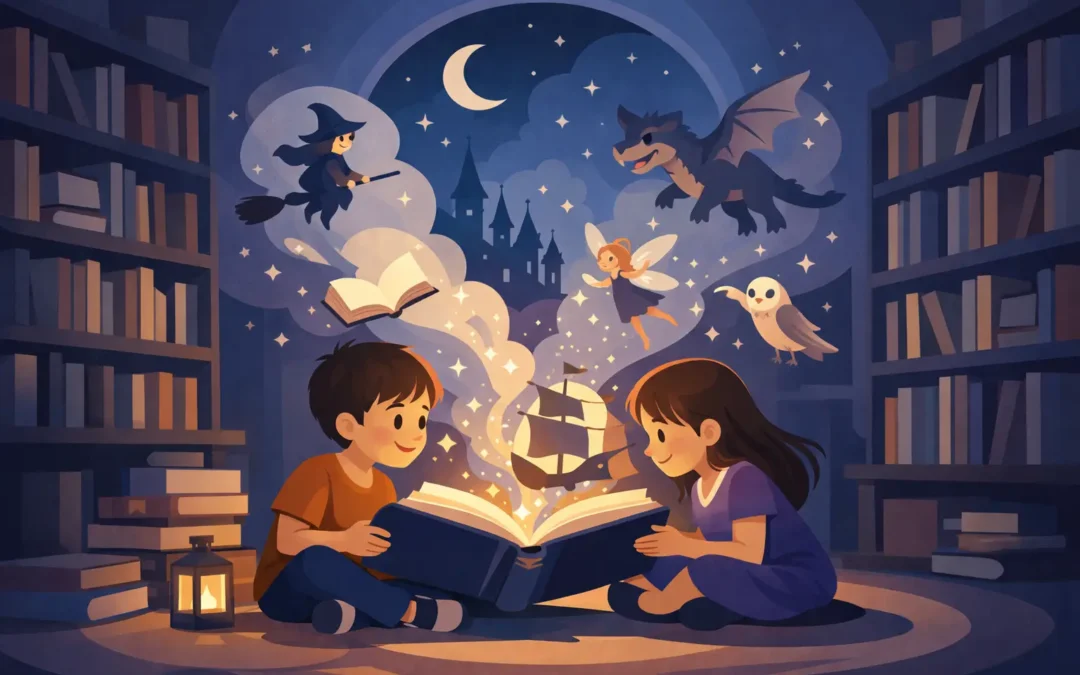
A child wanders between library shelves looking for one good story, and somehow finds a doorway instead. That is the special pull of magical library stories for kids. They promise secret rooms, whispering books, and impossible adventures, but they also offer something quieter and just as powerful – the feeling that stories can help children make sense of their own lives.
For middle grade readers, that combination matters. Kids ages 8 to 12 are old enough to ask big questions about friendship, fairness, family, and who they are becoming. They still want wonder, but they also want stories that feel true in the heart. A library fantasy can do both at once. It can send a child into enchantment while keeping one foot planted in the very real world of school hallways, changing friendships, money worries, and the need to belong.
Why magical library stories for kids matter
The library itself is already close to magic in a child’s imagination. It is full of doors that look ordinary from the outside. One shelf holds a mystery, another a laugh, another a life that looks nothing like your own. Add a little fantasy, and the setting becomes even richer. A book might choose its reader. A librarian might guard ancient secrets. A forgotten corner might hold a map, a spell, or a second chance.
But the best magical library stories for kids are not only built on clever ideas. They understand what a library means emotionally. For some children, the library is a safe place after a hard day. For others, it is a place where they can feel capable, curious, and welcome. That emotional truth is what gives the fantasy weight.
A magical premise on its own can be fun for a chapter or two. What keeps readers turning pages is the sense that the magic is connected to something that matters. Maybe the main character feels invisible and finds a book that finally sees them. Maybe they are carrying fear at home and discover a world where courage grows one choice at a time. The enchantment works best when it reflects the child’s inner journey rather than distracting from it.
What makes a library story feel truly magical
A strong magical library story usually starts with tension, not glitter. Something is missing. A kid feels out of place. A family is struggling. A friendship is cracking. The library enters as a place of possibility, and then the story begins to widen.
That widening can happen in different ways. Sometimes the magic is hidden in the books themselves. Sometimes it lives in the building, with moving staircases, secret archives, or mysterious rules. Sometimes the magic is tied to a person who protects stories and understands their power. Each choice creates a slightly different reading experience.
If the books are magical, the story often feels intimate and imaginative. If the library building is magical, the world can feel expansive and adventurous. If a librarian or guide holds the secret, the story may carry a deeper sense of legacy, mentorship, and trust. None of these approaches is automatically better. It depends on the age of the reader, the emotional stakes, and how grounded the author wants the fantasy to feel.
The most memorable examples also treat reading as an act of courage. Opening a story becomes more than a pastime. It becomes a way to face loss, loneliness, or uncertainty. That is where these books can stay with children long after the final page.
The real-world heart inside magical library stories for kids
Adults sometimes assume fantasy is escapism and realism is substance. Children’s literature knows better. Fantasy can make difficult feelings easier to approach because it gives them shape. A locked room can stand in for grief. A cursed book can mirror shame. A hidden collection can represent hope that has been ignored but not lost.
This is especially true for middle grade readers. They are beginning to understand that the world is not always fair, yet they still believe change is possible. A magical library story meets them right there. It says yes, life can be hard. It also says help may come from unexpected places, and often from within.
That balance is delicate. If a story becomes too heavy, younger readers may feel overwhelmed. If it becomes too whimsical, the emotional core can disappear. The strongest books manage both tenderness and adventure. They trust children with honest themes while still giving them room to feel delight.
This is one reason educators, librarians, and parents are often drawn to these stories too. A well-written library fantasy can open conversations about resilience, self-worth, economic hardship, kindness, and community without sounding like a lesson. The child enters for the mystery and stays for the meaning.
What parents, teachers, and librarians should look for
Not every bookish fantasy will land the same way for every child. Some young readers want high-stakes adventure. Others want a gentler story with warmth and wonder. A few are ready for emotionally layered books that reflect real hardship. Knowing the reader matters as much as knowing the genre.
For ages 8 to 10, stories with a clear magical hook, accessible language, and a strong sense of safety tend to work well. These readers often enjoy rules they can quickly understand, a brave but relatable main character, and satisfying emotional payoff. They may love mystery, but they usually want reassurance that the world of the story still has order.
For ages 10 to 12, readers are often ready for more complexity. They can handle a little more ambiguity in the magic and more nuance in the emotional stakes. They may be especially drawn to stories where books and libraries are not only magical settings, but places where identity, belonging, and courage are tested.
Adults choosing magical library stories for kids should also pay attention to what kind of hope the story offers. Some books end in triumph. Others end in healing. Both can be valuable, but they feel different. A child going through a hard season may need comfort more than spectacle.
Why these stories keep getting passed from reader to reader
There is a reason library fantasies have such staying power. They celebrate reading without making it feel like homework. They honor quiet children, curious children, lonely children, and bold children. They suggest that knowledge matters, imagination matters, and ordinary places can hold extraordinary things.
They also create a lovely kind of recognition. The child reading in bed or in the back seat sees a character who also reaches for stories when life feels uncertain. That can be deeply affirming. It tells young readers that loving books is not small or strange. It is a kind of strength.
And because libraries belong to communities, these stories often carry a sense of shared hope. The hero may begin alone, but rarely stays that way. There are allies, helpers, protectors, and friends. In a time when many children are quietly carrying more than adults realize, that message matters.
A story about a magical library can still be funny, suspenseful, and full of twists. It should be. Wonder works best when it feels alive. But underneath the enchantment is a simple promise: you are not lost, and there may be more doors open to you than you think.
That promise is part of what makes stories like The Book Witch resonate with readers who long for both imagination and heart. When a book invites children into magic while honoring the real challenges they face, it becomes more than a passing adventure. It becomes a companion.
For young readers, that is often the truest magic of all. Not that a library shelf might swing open to reveal another world, though that is certainly lovely. It is that somewhere among the pages, a child may find courage, comfort, and the sense that their own story still has room to grow.