
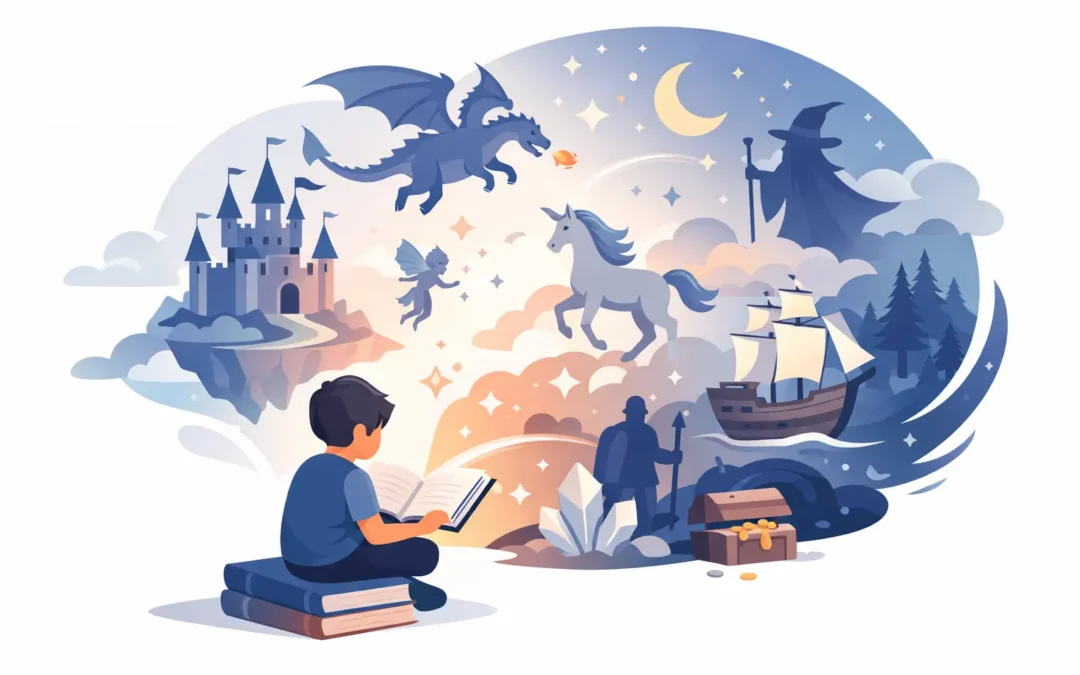
A child opens a book and suddenly the ordinary world loosens its grip. A hallway might hide a portal. A quiet girl might carry unusual power. A lonely child might find a friend in the last place anyone thought to look. When people ask why do kids like fantasy, the answer is not just that fantasy is fun. It is. But the deeper answer is that fantasy meets children where they are – full of questions, feelings, fears, hope, and a growing sense that the world is bigger than it seems.
Fantasy gives young readers something they need and something they want at the same time. It offers wonder, which draws them in, and meaning, which stays with them after the last page. For middle grade readers especially, that combination can feel electric.
Why do kids like fantasy in the first place?
Children live close to imagination. Adults often separate the real from the impossible with neat lines, but kids are still learning how the world works, who they are, and what kind of future might be waiting for them. Fantasy feels natural in that stage of life because it reflects the way childhood already feels – mysterious, surprising, and sometimes larger than language.
A child does not need to be convinced that hidden things might matter. They already suspect it. They know a grown-up can say, “It’s just a house,” while a child sees creaking stairs, shadows, secrets, and stories. Fantasy honors that instinct instead of flattening it.
That matters because children are not shallow readers. They may come for dragons, enchanted books, witches, magical forests, or impossible adventures, but they stay for the emotional truth underneath. The best fantasy tells them, in a language they can feel, that the strange parts of life are worth facing.
Fantasy makes big feelings easier to handle
One reason kids connect so strongly with fantasy is that it gives shape to emotions that can be hard to name. Fear becomes a monster. Loneliness becomes a dark wood. Hope becomes a key, a light, a spell, a friend who appears just in time.
For children, this is more than clever storytelling. It is relief. Real life can feel confusing or overwhelming, especially during the middle grade years, when friendships shift, confidence wobbles, and the world starts asking more of them. Fantasy creates enough distance for a child to think about difficult experiences without feeling cornered by them.
A story about a cursed town, for example, may also be a story about grief. A story about a missing magical object may really be about a child trying to hold a family together. A story about a hidden power may quietly speak to self-worth. Kids often understand these layers intuitively, even when they cannot explain them out loud.
This is part of why fantasy can be especially powerful for children moving through hardship. It does not deny pain. It transforms it into something navigable.
The freedom to imagine a different outcome
Childhood comes with limits. Adults make the rules. School schedules shape the day. Family circumstances can feel fixed. Kids do not control much, and they know it.
Fantasy offers a thrilling counterweight. In fantasy, a child can matter enormously. A kid can solve the mystery, break the curse, protect a friend, or save a place worth loving. That kind of story is not just escapism. It is practice in agency.
When young readers see characters their age making brave choices, they begin to imagine themselves as capable too. Not capable of casting literal spells, of course, but capable of speaking up, helping someone, enduring difficulty, or believing they have value. Fantasy lets possibility bloom before real life catches up.
That does not mean every fantasy story needs a world-ending quest. Smaller stakes can feel just as important. Protecting one friendship, one library, one home, or one fragile hope can matter deeply to a child reader. Sometimes those quieter victories are the ones that stay closest to the heart.
Why do kids like fantasy when real life is already full enough?
Because fantasy does not pull kids away from reality as much as adults sometimes assume. At its best, fantasy helps them return to reality with more courage and clarity.
A child who reads fantasy is not rejecting the real world. More often, they are looking for a way to understand it. Magic creates a frame where questions become visible. Who belongs here? What is worth protecting? Can broken things heal? What do we do when the people we love are struggling? How do we keep going when we feel small?
These are real questions, even in the most enchanted setting.
That is one reason fantasy with emotional grounding tends to resonate so strongly. Children want wonder, but they also want recognizable human stakes. They respond to stories where magic exists alongside friendship troubles, family strain, uncertainty, jealousy, kindness, and resilience. The invented world may be impossible, yet the feelings are completely true.
Fantasy respects children as deep thinkers
There is a common mistake adults make when choosing books for kids. They assume lighthearted means simple, or magical means less serious. But children are often more open to complexity than we give them credit for.
Fantasy invites them to think in symbols, patterns, and possibilities. It asks them to notice clues, imagine systems, and hold more than one truth at once. A place can be dangerous and beautiful. A character can be brave and afraid. A gift can also be a burden.
This is rich mental and emotional work, and kids are often eager for it.
Middle grade readers in particular are beginning to wrestle with moral shades of gray. They are old enough to sense that life is complicated, but young enough to still hunger for hope. Fantasy is uniquely suited to that balance. It can hold darkness without becoming despairing. It can show injustice without pretending goodness is powerless.
The role of wonder in growing up
Wonder is not fluff. It is a serious part of how children learn to care.
When a story makes a child marvel, it opens attention. It slows them down. It helps them notice. That may be the shimmer of a magical object or the rules of an invented world, but it can also be the ache in a character’s heart. Wonder and empathy often travel together.
A child enchanted by a story is often more willing to follow it into difficult places. They will walk farther with a character if they trust the journey will hold beauty along with struggle. That is one reason fantasy can be such a strong bridge for conversations about belonging, poverty, grief, family instability, or feeling unseen. Wonder keeps the door open.
It also gives children joy, which is not a small thing. Joy helps readers return to books. Joy builds stamina. Joy reminds children that reading is not only educational, but alive.
Not every child likes the same kind of fantasy
This is where it depends. Some kids love high-stakes adventures with elaborate worlds. Others prefer stories where the magic is tucked into ordinary life – a strange book, a mysterious shop, a whisper of enchantment in a familiar town. Some want funny fantasy. Some want spooky fantasy. Some want fantasy that feels almost real.
What draws one child in may push another away. A heavily built world can thrill one reader and overwhelm another. A gentle magical story may feel perfect for a child who wants emotional connection more than action. Taste, reading confidence, age, and temperament all play a part.
That is helpful for parents, teachers, and librarians to remember. If a child says they do not like fantasy, they may just not have met the right kind yet.
What adults often miss about fantasy readers
Adults sometimes see fantasy as a phase children will outgrow, but that misses the deeper value of these stories. Fantasy can help kids rehearse bravery, test ideas about fairness, and imagine themselves as worthy of help and capable of change.
It can also make room for children who feel out of place. Many fantasy heroes begin on the margins – misunderstood, underestimated, lonely, or quietly burdened. Young readers who know those feelings often recognize themselves there. That recognition matters.
This is one reason emotionally grounded fantasy can be so lasting. A magical story may entertain in the moment, but a meaningful one tells a child, “You are not strange for feeling what you feel. You are not alone in it. There may be more strength in you than anyone can see right now.”
That is not a small message. It is the kind readers carry into real life.
For many children, fantasy becomes a safe place to ask hard questions and keep hope intact. It lets them believe that hidden doors can open, that ordinary kids can matter, and that difficult chapters are not the end of the story. If a book can offer that kind of companionship, it is easy to understand why children return to fantasy again and again.