by | Jul 19, 2026 | Uncategorized
A child may not have words for housing insecurity, grief, loneliness, or feeling like the odd one out. But they recognize the feeling of a character worrying about a shutoff notice, sitting alone at lunch, or wishing their family could stay in one place. That is why social themes in kids books matter. They give young readers a safe, story-shaped way to meet difficult realities while holding on to the hope that hard moments can change.
For middle grade readers especially, books can become a private place to ask big questions. Why do some families have more than others? What makes a true friend? What do I do when I feel ashamed of something I cannot control? A meaningful story does not lecture children toward one correct answer. It lets them walk beside a character, feel the stakes, and come away with more compassion for themselves and others.
Why Social Themes in Kids Books Belong Beside Magic
Some adults worry that realistic social issues will make reading feel heavy. That can happen when a book treats its message like homework. But a well-told story makes room for both truth and wonder.
Magic, mystery, humor, adventure, and friendship can give readers breathing room. They can also help a child approach a painful subject from a little farther away. A magical library, a secret quest, or an impossible problem may feel safer to enter than a direct conversation about poverty or family instability. Once a reader is inside the story, the emotional truth can land with surprising power.
This is one reason fantasy and grounded realism work so well together in middle grade fiction. The fantastical elements invite curiosity. The real-life struggles give that curiosity a beating heart. In The Book Witch, magic and books create a sense of possibility while the characters face questions of belonging, hardship, and self-worth. Neither element cancels out the other. The wonder makes the difficult moments bearable, and the difficult moments make the wonder matter.
The Themes Children Notice, Even When Adults Look Away
Children are observant. They see who gets picked up in a new car, who cannot join an activity, who moves away suddenly, and who is treated as though they do not belong. They may not understand every reason behind what they see, but they understand unfairness, embarrassment, fear, and kindness.
Books can help name those experiences without reducing children to problems that need fixing. A character who lives with financial hardship should still get to be funny, brave, creative, stubborn, and loved. A child with an unstable home life should not exist only to teach another character a lesson. When authors make room for a whole person, readers learn to see whole people in their own communities.
Poverty and financial hardship
Stories about money need care. The goal is not to make hardship look charming or to ask readers to pity a family. It is to show the everyday choices and pressures that money can create: a missed field trip, a too-small coat, a parent working late, or the quiet fear of losing a home.
For a reader living through similar circumstances, that recognition can be deeply affirming. For a reader who has not, it can replace assumptions with empathy. The best stories also show dignity, resourcefulness, and connection, not just struggle.
Family change and instability
Families come in many shapes, and sometimes their shape changes without warning. Divorce, illness, incarceration, addiction, frequent moves, and conflict can all leave children feeling responsible for things they cannot control.
A book cannot solve those situations, but it can offer an essential message: what is happening around you is not the same as who you are. Characters who find trustworthy adults, build friendships, or ask for help can show readers that support may exist beyond the walls of their homes.
Friendship, belonging, and social pressure
For many middle grade readers, friendship is not a small theme. It is the center of the universe. A best friend’s silence, a group chat left unanswered, or a new student at school can feel enormous because belonging is enormous.
Stories can show that friendship is more than being included when things are easy. It asks for honesty, repair, courage, and sometimes the willingness to stand apart from the crowd. These lessons are more memorable when readers watch characters make mistakes, rather than when a narrator simply tells them what kindness looks like.
What Makes a Theme Feel Honest Instead of Heavy-Handed?
Children can sense when a story is trying too hard to teach them. Honest social themes grow from character, conflict, and consequence. They are part of what the protagonist wants, fears, and must learn to face.
A child who is embarrassed by their family’s finances may push away a friend who offers help. A character desperate to fit in may make a choice that hurts someone else. These moments create real tension because there is no easy villain to blame. Readers can understand why someone acted badly without being asked to excuse the harm.
Hope matters here, but hope is not the same as a tidy ending. Not every family problem can be fixed by the last chapter. Not every friendship returns to what it was. A hopeful ending may simply mean a character has found their voice, accepted help, or realized they deserve better than the story they have been telling themselves.
That balance is especially valuable for readers ages 8 to 12. They are ready for emotional complexity, but they still need to feel that courage and care can make a difference. The story does not have to promise that everything will be easy. It should leave a small light on.
Choosing Books With Social Themes for Young Readers
Parents, teachers, and librarians often look for books that open meaningful conversations. The right choice depends on the child. One reader may be ready for a direct, realistic story about a difficult family situation. Another may connect more easily through fantasy, humor, or a mystery that carries the theme beneath the surface.
Consider the reader’s temperament and current circumstances, not only their age. A child who has experienced a recent loss may need a book that feels gentle and companionable. Another may want a story that is bolder, funnier, or more action-filled. There is no single correct level of intensity.
It also helps to look for stories where the social theme is not the character’s entire identity. Seek books with agency. Does the young protagonist make choices? Do they have interests, flaws, dreams, and moments of joy? Are there adults who are complicated but believable, rather than perfect rescuers or cartoon villains?
After reading, a simple question can go further than a formal lesson: “What part of that character’s problem felt hardest?” Younger readers may want to talk right away. Others may shrug, change the subject, and return days later with a thought that has been quietly growing. Let the book do some of its work in silence.
Stories Can Build a Wider Circle
The lasting gift of socially meaningful fiction is not that it turns every child into an expert on hardship. It helps them practice noticing. A reader may become gentler with the classmate who never brings lunch money, more patient with a friend whose home life feels unpredictable, or less ashamed of their own family’s struggles.
Just as importantly, these books remind children that they are not alone in feelings that can seem impossible to explain. Somewhere, a character has worried, hoped, made a mess, found a friend, and kept going. For a young reader, that recognition can feel a little like finding a light in a dark hallway – not a promise that the hallway disappears, but a reason to take the next step.
by | Jul 17, 2026 | Uncategorized
A child who once begged for one more bedtime story may suddenly want to choose every book alone. That growing independence is exciting, but it can leave parents wondering what is waiting between the covers. This parent’s guide to tween novels can help you choose stories that respect your child’s maturity, protect their sense of wonder, and give them room to think about the complicated parts of growing up.
Tween novels are not just a bridge between childhood favorites and teen fiction. At their best, they are a place where young readers can meet brave friends, face fears from a safe distance, and discover that difficult feelings do not have to be faced alone. The right book can be a thrilling escape after a hard school day, a quiet source of reassurance, or the beginning of a conversation neither of you knew how to start.
What Makes a Tween Novel a Good Fit?
Most tween novels fall within middle grade fiction, generally written for readers ages 8 to 12. That range is wide, however. An adventurous eight-year-old and a thoughtful twelve-year-old may both love fantasy, but they may be ready for very different emotional stakes, vocabulary, or levels of suspense.
Rather than treating age recommendations as strict rules, use them as a starting point. Consider your child’s reading confidence, sensitivity, interests, and lived experience. A child who has experienced family change may find comfort in a story about a character rebuilding trust. Another may need a lighter, laugh-out-loud adventure before they are ready for a book with similar themes.
Look for a child-centered point of view
A strong tween novel lets young readers see the world through a character whose problems feel real to them. The stakes might involve friendship trouble, a school performance, a family secret, a neighborhood change, or a magical mystery. Even when adults appear in the story, the young character should have meaningful choices, growth, and agency.
This matters because tweens are beginning to test their own values. They are asking who they are apart from their parents, teachers, and friends. Books can offer a gentle rehearsal space for making mistakes, speaking up, and trying again.
Expect challenge, not hopelessness
Middle grade stories often include genuine hardship. Characters may encounter grief, financial stress, bullying, loneliness, divorce, illness, prejudice, or instability at home. Avoiding every difficult subject is not always the same as protecting a child. Many readers feel seen when books name challenges they have noticed but could not yet explain.
The key question is how the story handles those challenges. Look for emotional honesty without graphic detail, and for a sense that help, connection, or possibility exists. Hope does not require a perfect ending. It can be as simple as a character finding one trustworthy friend, asking for help, or realizing they have more strength than they thought.
Notice the emotional aftertaste
A book’s premise can only tell you so much. Two novels might both include a frightening scene or a struggling family, yet one leaves readers unsettled while the other leaves them steadier and more compassionate. Reviews, a quick read of the opening chapters, and a conversation with a librarian can help you understand the emotional tone.
Ask yourself whether the story makes room for recovery. Does it offer warmth, humor, wonder, or relationships that balance the darker moments? Those elements are not decorations. They help young readers process tension without becoming overwhelmed.
A Parent’s Guide to Tween Novels by Reading Interest
Matching a book to a child’s interests can be more useful than searching for a single perfect reading level. A hesitant reader may eagerly finish a novel about dragons, sports, mysteries, or secret societies if the premise speaks directly to them. A passionate reader may be ready for a longer, more layered story because they want to stay with the characters.
For readers who want magic with heart
Fantasy is often a powerful doorway into emotional realism. A magical library, a hidden world, or an impossible quest gives children a little distance from worries that might otherwise feel too close. Through fantasy, a reader can explore belonging, courage, poverty, family tension, or self-worth without being asked to relive those experiences directly.
Look for magic that deepens the character’s journey rather than simply adding spectacle. In K.L. Baxton’s The Book Witch, books and magic create an imaginative path into questions of friendship, resilience, and what it means to believe in your own value. Stories like this can invite meaningful discussion while still delivering the pleasure of a good adventure.
For readers drawn to realistic stories
Realistic fiction can help tweens recognize that ordinary life contains dramatic moments of its own. A move, a changing friendship, a parent losing a job, or a classroom conflict can feel enormous at this age. When a character faces a familiar problem with honesty, readers may gain language for their own feelings.
Choose stories that do not preach. Young readers can spot a lesson disguised as a lecture. The most memorable realistic novels let characters be funny, stubborn, imperfect, and surprising. They show consequences, but they also make room for joy.
For readers who say they do not like books
Sometimes a child does not dislike reading. They dislike being handed books that do not feel like theirs. Try offering choice across formats and genres: graphic novels, verse novels, mysteries, humorous school stories, animal adventures, historical fiction, or audiobook companions.
Keep the pressure low. You might read the first chapter aloud, listen to an audiobook during a drive, or let your child abandon a book that truly is not working. Finishing every book is not the goal. Building a relationship with reading is.
How to Check Content Without Taking Over
Parents deserve clear information about what their children are reading, especially when a child is sensitive to certain subjects. At the same time, tweens benefit when adults approach books with curiosity rather than suspicion. Reading choices can become a meaningful part of a child’s growing independence.
Preview with a purpose
You do not need to read every novel before your child does. Instead, use a few trusted signals. Read professional reviews, ask a school or public librarian, scan the publisher’s age range, and look at a sample of the writing when possible. These steps can reveal whether a book’s language, themes, and intensity are likely to fit your family.
Be mindful that content labels cannot capture every child’s response. One reader may be disturbed by a tense argument, while another is more affected by animal peril or embarrassment at school. If you know your child’s tender spots, that knowledge is often more useful than a general rating.
Talk before and after, not like an interrogation
A simple question can open a door: What do you think of the main character so far? You can also ask what part felt exciting, unfair, confusing, or familiar. Let the child lead when they want to talk, and accept a brief answer when they do not.
If a book raises a concern, begin with the story rather than a lecture. Ask what the character could have done differently, who helped them, or whether the ending felt fair. This keeps the focus on empathy and critical thinking instead of turning reading into a test.
Let books grow with your child
A book that feels too intense this year may be exactly right next year. A familiar comfort read may remain valuable long after a child has the skill to read more advanced fiction. Reading development is not a straight climb toward harder material. It is a changing relationship with language, emotion, identity, and joy.
Make Reading Feel Like Belonging
The most lasting reading habits are often built through connection. Keep books visible at home, visit the library or bookstore together, and let your child see you read for pleasure. When a novel moves them, treat that response as worthwhile, whether it comes with tears, laughter, or an urgent need to tell you about a surprising twist.
A thoughtful tween novel does more than fill quiet time. It can offer a young person a companion for the questions they are just beginning to carry. Choose stories with room for wonder, honesty, and hope, then leave the light on for whatever conversation comes next.
by | Jul 13, 2026 | Uncategorized
A child closes a book and suddenly understands why a classmate might stay quiet, why a family might move often, or why someone’s anger may be hiding hurt. That is the quiet power of the best books for tween empathy. They do not lecture readers into being kinder. They invite them into another person’s worries, hopes, mistakes, and small acts of courage.
For ages 8 to 12, empathy is not simply about agreeing with everyone. It is about learning to pause, listen, and recognize that every person carries a story that may not be visible at first glance. The books below offer that experience with humor, wonder, honesty, and hope.
What Makes a Book Build Empathy?
A meaningful empathy story gives young readers a safe place to feel complicated emotions. The main character may make choices a reader would not make. A situation may be unfair. A friendship may take work to repair. When a book stays close to a character’s inner life, readers get to practice asking, “What might this feel like?”
The strongest middle grade books also leave room for joy. Tender stories do not need to be heavy on every page. A funny scene, a loyal pet, a magical discovery, or a hard-won friendship can help readers stay open to characters whose experiences differ from their own.
Some of these titles include themes such as poverty, war, disability, racism, family separation, and grief. The right fit depends on the individual child. Parents, teachers, and librarians can use the descriptions below to choose a book that offers both a gentle challenge and a hopeful place to land.
12 Best Books for Tween Empathy
Wonder by R.J. Palacio
Auggie Pullman is starting school after years of being homeschooled, and he knows people may stare because of his facial differences. What makes this story especially powerful is its shifting point of view. Readers see not only Auggie’s experience but also the fears, loyalty, jealousy, and uncertainty of the people around him. It encourages children to look beyond a first impression and consider the impact of everyday choices.
Front Desk by Kelly Yang
Mia Tang helps her parents manage a motel while they struggle to make ends meet and quietly assist immigrant families who need a place to stay. Mia is bright, determined, and sometimes overwhelmed, which makes her an easy character to cheer for. Her story creates space for conversations about economic hardship, prejudice, courage, and the many ways families care for one another.
The War That Saved My Life by Kimberly Brubaker Bradley
When Ada and her brother are evacuated from London during World War II, Ada enters a world far beyond the apartment where she has been kept hidden because of her clubfoot. This is a tender, sometimes difficult story about abuse, healing, and learning to trust. Readers witness how patient care can change a life, while also seeing that recovery is rarely quick or simple.
A Kind of Spark by Elle McNicoll
Addie is an autistic girl who wants her Scottish town to honor women who were persecuted as witches long ago. She must also navigate school, friendships, and adults who underestimate her. Addie’s clear, determined voice helps readers understand how exhausting it can be to be misunderstood. Just as importantly, the book celebrates self-advocacy without asking its heroine to become someone else.
The One and Only Ivan by Katherine Applegate
Ivan, a gorilla living in a shopping mall enclosure, tells his story with spare, observant humor. When a young elephant arrives, Ivan begins to see his own captivity differently and feels responsible for helping her. This gentle novel opens a natural conversation about animals, freedom, promises, and the moment compassion moves us to act.
New Kid by Jerry Craft
Jordan Banks loves art and wants to attend art school, but instead he begins seventh grade at a private school where he is one of few kids of color. Told in a lively graphic novel format, New Kid captures the awkwardness of entering unfamiliar spaces and the sting of casual assumptions. Its humor makes it especially approachable, while its honesty encourages readers to notice exclusion that can otherwise be brushed aside.
The Night Diary by Veera Hiranandani
In 1947, Nisha’s family must leave home during the Partition of India. Through diary entries addressed to her late mother, Nisha shares the fear of a dangerous journey and the sorrow of leaving behind people she loves. The book is emotionally rich without losing sight of family tenderness. It helps young readers understand that history is made of individual lives, homes, meals, memories, and losses.
Other Words for Home by Jasmine Warga
Jude moves from Syria to Cincinnati to live with relatives while her mother awaits the birth of a baby. Written in accessible verse, the novel follows Jude as she learns English, misses her brother, confronts misunderstanding, and discovers a love of theater. It is a beautiful choice for readers who may feel nervous about change, as well as those learning to welcome someone new.
Because of Winn-Dixie by Kate DiCamillo
A stray dog brings lonely Opal into the lives of people in her small Florida town, including neighbors she might otherwise have overlooked. The story has warmth, silliness, and sadness, but never loses its belief in connection. Opal learns that people who seem strange or distant often have reasons for their loneliness, and that friendship can begin with simple curiosity.
Fish in a Tree by Lynda Mullaly Hunt
Ally has become very skilled at hiding the fact that she cannot read well. When a thoughtful teacher recognizes her struggle with dyslexia, Ally begins to imagine a future that is larger than the labels other people have given her. Readers may recognize both sides of the classroom: the child trying not to be noticed and the classmates who need to learn that intelligence comes in many forms.
The Book Witch by K.L. Baxton
For readers who love a touch of magic alongside real-world heart, The Book Witch follows a young girl facing financial hardship, family instability, and questions about her own worth. Its imaginative premise keeps the story moving, while its emotional center makes room for compassion toward people whose lives may look very different from a reader’s own. It is a fitting choice for book-loving tweens who want wonder without turning away from life’s challenges.
The Bridge Home by Padma Venkatraman
After running away from an unsafe home, two sisters and their friends try to survive on the streets of Chennai. This novel asks readers to look closely at children who are too often ignored and to see their intelligence, humor, loyalty, and dreams. The subject matter is serious, so it may be best shared with a trusted adult or used in a classroom reading group. Its compassion, however, is profound.
Help the Story Stay With Them
A book can open an emotional door, but a simple conversation can help a child walk through it. There is no need to turn every chapter into a lesson. Sometimes the best question is, “Which character did you understand better by the end?”
You might also ask what surprised them, whether a character was treated fairly, or what they would want to say to someone in the story. If a child feels strongly about a choice a character made, invite them to explain why. Empathy grows when children realize they can hold two ideas at once: a character may have made a harmful choice, and that character may still be carrying pain.
For classroom or family reading, pay attention to the child who identifies with a difficult experience. A student who has moved homes, struggled with reading, felt left out, or worried about money may not want to speak publicly about it. Offer room for private reflection through drawing, journaling, or simply choosing the next book together.
Choosing the Right Empathy Book for Your Tween
The best match is not always the most serious title on the shelf. A child who loves graphic novels may connect deeply with New Kid. A reader drawn to animals may find a first doorway into compassion through The One and Only Ivan. A tween who escapes into fantasy may be more ready to consider real challenges when they are paired with a little magic.
Let their interests lead, then gently widen the circle. Reading about people unlike ourselves matters, but so does the relief of seeing part of our own experience reflected with care. Both kinds of stories tell young readers the same hopeful truth: you are not alone, and neither is anyone else.

by | Jul 9, 2026 | Uncategorized
Some children reach for funny books when life feels heavy. Others want mystery, magic, or a character who knows what it means to feel left out. The best books for resilient young readers do something special – they make room for fear, grief, anger, or uncertainty, then quietly remind kids that strength can grow there too.
For middle grade readers, resilience rarely looks grand. It looks like getting through a hard school day. It looks like trying again after embarrassment, speaking up for a friend, or holding on to hope when home feels unsteady. That is why the right story matters so much. A good book does not lecture children about being brave. It lets them feel bravery taking shape, one page at a time.
What makes books for resilient young readers stand out
Not every book about hardship helps a child feel stronger. Some stories are too bleak. Others rush past the emotional truth and tie everything up too neatly. The books that stay with readers tend to balance honesty with hope.
They often feature young characters facing real challenges – family stress, loneliness, bullying, change, poverty, loss, or self-doubt – while still leaving room for friendship, humor, wonder, and discovery. That balance matters. Children do not need stories that pretend life is easy, but they also do not need stories that leave them stranded in the dark.
Books that build resilience also respect a child’s inner life. They show that being sensitive is not the opposite of being strong. A worried child can be brave. A grieving child can still be curious. A quiet child can still change the world around them.
For parents, teachers, and librarians, this means looking beyond books with a simple “overcoming adversity” label. It helps to ask a better question: Does this story leave a young reader feeling seen, steadied, and a little more hopeful?
12 books for resilient young readers
Because of Winn-Dixie by Kate DiCamillo
This is a tender, openhearted story about loneliness, grief, and unexpected connection. Opal’s friendship with a scruffy dog opens the door to new relationships and deeper conversations about the pain she carries.
What makes it powerful is its gentleness. The book never pushes too hard, yet it gives children language for sadness, forgiveness, and belonging. It is especially good for readers who need a reminder that community can form in surprising places.
The One and Only Ivan by Katherine Applegate
Ivan’s story is full of restraint, which is part of what makes it so moving. Through a calm and thoughtful voice, readers witness injustice, loyalty, and the courage it takes to imagine a better life.
For resilient young readers, this book offers a quiet kind of strength. It shows that endurance matters, but so does the moment when endurance turns into action.
Wishtree by Katherine Applegate
This novel speaks directly to questions of kindness, fear, and welcome. Red, an old tree, watches over a neighborhood where one child feels unsafe and unseen.
The story is simple on the surface, but its message lands deeply. It helps children think about empathy and courage in community settings, especially when someone is being excluded.
Front Desk by Kelly Yang
This is one of the clearest examples of a middle grade novel that handles financial hardship without losing energy or heart. Mia helps her parents manage a motel while navigating school, prejudice, and the pressure of keeping difficult secrets.
What makes this book shine is its honesty. Resilience here is not abstract. It is practical, emotional, and exhausting at times. That truth can be deeply validating for kids who understand more about money worries than adults sometimes realize.
The Miraculous Journey of Edward Tulane by Kate DiCamillo
Some children love books that speak softly but hit hard. This is one of them. Edward, a china rabbit, goes through loss after loss and slowly learns how to love.
It is a beautiful choice for readers ready to think about heartbreak and healing. Sensitive children may need support with this one, but for the right reader, it can open an honest conversation about vulnerability and growth.
A Kind of Spark by Elle McNicoll
Addie’s story is about being misunderstood and refusing to disappear. As an autistic girl determined to honor women once accused of witchcraft in her town, she shows persistence, intelligence, and moral clarity.
This book is especially meaningful for readers who have felt dismissed or underestimated. Its resilience comes not from fitting in, but from holding tight to who you are.
Merci Suárez Changes Gears by Meg Medina
Merci faces shifting friendships, family worries, and the awkwardness of growing up. The novel captures the small humiliations and quiet acts of courage that shape middle school life.
That is part of its strength. Resilience here looks familiar. It is tangled up with embarrassment, love, pride, and learning how to ask for help.
Other Words for Home by Jasmine Warga
Written in verse, this story follows Jude as she leaves Syria for the United States. The book explores displacement, identity, and finding safety while carrying the ache of separation.
For many readers, the verse format makes the emotions feel immediate and accessible. It is a thoughtful choice for children learning that resilience can include both grief and joy at the same time.
Fish in a Tree by Lynda Mullaly Hunt
Al has spent years hiding her dyslexia behind defiance and misdirection. When a teacher finally sees what is really going on, her world begins to change.
This book resonates with kids who fear they are not smart enough or who have learned to protect themselves with humor or anger. It reminds readers that struggle is not failure, and being understood can change everything.
The Penderwicks by Jeanne Birdsall
Not every resilient story needs a heavy plot. Sometimes resilience grows through warmth, imagination, sibling loyalty, and the ordinary upsets of childhood. The Penderwick sisters face disappointment, conflict, and change, but the book remains buoyant.
This is a wonderful option for children who need emotional steadiness without intense themes. It still honors resilience, just in a lighter key.
The Book Witch by K.L. Baxton
For readers who love stories shaped by magic and real feeling, this kind of novel can be especially powerful. A book-centered fantasy that also touches family instability, friendship, poverty, and self-worth offers more than escapism. It gives children a place to imagine wonder while staying connected to the challenges that many of them recognize.
That blend matters. When a story holds both enchantment and emotional truth, it can help young readers feel that hard things do not cancel out hope.
Out of My Mind by Sharon M. Draper
Melody is brilliant, observant, and often underestimated because of her disability. Her voice is unforgettable, and her frustration is rendered with honesty and force.
This is a strong pick for readers ready to confront unfairness head-on. It asks children to look closely at bias, dignity, and the determination it takes to keep asserting your full humanity.
How to choose the right resilient read
It depends on the child. A reader going through a hard season may want a book that mirrors their experience closely, or they may want one step of distance through fantasy, humor, or animal characters. Both responses are valid.
Age and temperament matter too. Some eight-year-olds can handle emotionally intense stories if the ending offers reassurance. Some twelve-year-olds still prefer gentler narratives that build confidence without too much emotional strain. The goal is not to hand every child the most serious book on the shelf. The goal is to find the story that helps them feel braver, safer, or less alone.
Adults can also pay attention to pacing. A child who is already overwhelmed may do better with a hopeful, fast-moving novel than a slow, emotionally demanding one. On the other hand, a reflective reader may welcome a quieter book that gives them room to think.
Why these stories matter beyond the page
When children read about characters who keep going, they begin to imagine new ways of moving through their own lives. Not perfectly. Not all at once. But with a little more courage.
That is one of the quiet gifts of books for resilient young readers. They do not simply tell children to be strong. They show that strength can look like asking for help, trying again, telling the truth, making a friend, or believing that your story is worth telling.
A child may finish one of these books and never say a word about its themes. But later, when life feels shaky, they may remember a character who endured, adapted, or hoped. Sometimes that is where resilience begins – not in a lesson, but in a story that stays.
by | Jul 7, 2026 | Uncategorized
A friendship can fall apart over one lunch table, one secret, or one moment of feeling left out. For tweens, those moments are not small. They can shape confidence, belonging, and the way a child sees themselves. That is why tween friendship books matter so much. At their best, they do more than tell a fun story. They give readers language for complicated feelings and remind them that growing up does not have to mean growing apart from kindness.
Why tween friendship books matter
Between childhood and the teen years, friendship starts to change. Kids begin noticing social circles, unspoken rules, shifting loyalties, and the sting of comparison. A best friend can feel like family one week and like a stranger the next. Books can meet readers right in that tender space.
The strongest friendship stories for tweens do not pretend every conflict has a neat fix. They understand that one friend may be moving away, changing schools, dealing with family stress, or simply growing in a different direction. That honesty matters. It helps young readers see that friendship is not just about finding someone fun to sit with. It is also about trust, forgiveness, boundaries, and the courage to be yourself.
For adults choosing books, this is where real value lives. A good friendship story can open a conversation that might otherwise feel awkward. It can help a child say, “That happened to me,” without having to begin with their own pain.
What makes the best tween friendship books stand out
Not every book about friends feels true. Some rush through conflict so quickly that the emotional weight disappears. Others make friendship drama feel meaner or more glamorous than it really is. The best books land somewhere more honest.
They usually begin with recognizable emotions. A child wants to fit in. A friend gets jealous. Someone feels left behind. A misunderstanding grows larger because nobody knows how to say what they mean. These are ordinary moments, but in middle grade fiction, ordinary moments can carry enormous emotional stakes.
The most memorable stories also give each child depth. The “good friend” is not perfect. The friend who makes a mistake is not automatically a villain. That nuance is especially important for tween readers, who are learning that people can be loving and flawed at the same time.
And then there is hope. Not every friendship should be saved, and that is worth saying plainly. Some books show reconciliation. Others show acceptance, new beginnings, or the relief of finding people who truly see you. All of those endings can be healing.
Different kinds of tween friendship books
Friendship stories are not all built the same, and that is part of their power. Some are quiet and realistic, centered on school hallways, sleepovers, and shifting social dynamics. These books are often the ones kids cling to when they need to feel understood.
Others use fantasy, mystery, or adventure to explore the same emotional truths. A magical setting can sometimes make real feelings easier to approach. When a story includes a hidden library, an impossible quest, or a touch of wonder, readers still recognize the heart of it – what it means to trust someone, lose someone, or find your place.
That is one reason middle grade readers often respond so strongly to stories that blend imagination with emotional realism. A book can offer enchantment without losing sight of the real challenges kids carry with them. In that sweet spot, friendship becomes both adventure and anchor.
How to choose tween friendship books for a specific reader
A child who loves big laughs may not want the same friendship story as a child who is quietly struggling with loneliness. Taste matters, but timing matters too.
If a reader is dealing with social stress, look for stories with emotional honesty and a steady sense of hope. You want a book that acknowledges hurt without making the world feel hopeless. If a child is a confident reader who enjoys layered characters, a more complex friendship story may be exactly right. For a younger or more sensitive tween, a gentler tone can be the better fit.
Genre also makes a difference. Realistic fiction often feels immediate and familiar. Fantasy and magical realism can offer some breathing room while still speaking directly to belonging, loyalty, and self-worth. Neither approach is better. It depends on the child holding the book.
Adults often ask whether books should mirror a child’s exact experience. Sometimes yes. Sometimes no. A reader who is feeling excluded may find comfort in seeing that same struggle on the page. Another child may prefer a little distance, entering the topic through humor, mystery, or magic instead. Good book matching is less about category and more about emotional readiness.
Tween friendship books for classrooms and libraries
In schools and libraries, friendship stories do especially meaningful work. They invite discussion about empathy without sounding like a lesson plan in disguise. That balance is rare and valuable.
A strong middle grade novel can spark conversations about kindness, peer pressure, honesty, and resilience in ways that feel natural. Students often respond more openly to a character’s choices than to direct questions about their own lives. Teachers and librarians know this instinctively. Fiction creates a safe side door into vulnerable topics.
Books that also touch on family hardship, identity, or community change can deepen those conversations even more. Friendship does not happen in a vacuum. A child’s home life, confidence, and sense of stability all shape how they connect with others. The best stories understand that friendships are often tested by forces bigger than the friendship itself.
That is part of what makes middle grade literature so powerful. It respects the emotional intelligence of young readers. It says, gently but clearly, that your feelings are real, your struggles are real, and your story matters.
When friendship stories help the most
Sometimes a child picks up a book about friendship because they already know what they need. More often, the need is quieter.
A tween may be grieving a friendship that suddenly changed. They may feel caught between old friends and new ones. They may be the child who always feels almost included, but not quite. In those moments, the right book can feel less like entertainment and more like companionship.
That does not mean every friendship book should be heavy. Joy matters too. Humor, adventure, and wonder can be just as healing as emotional catharsis. In fact, many young readers need both. They want a story that understands pain but still leaves room for delight.
That balance is part of what families, educators, and librarians so often seek in children’s literature. They want books that tell the truth about growing up while still protecting a child’s sense of possibility.
Why stories with heart stay with readers
Readers may forget every plot twist, but they remember how a book made them feel. They remember the friend who stayed. The apology that finally came. The moment a lonely character realized they were not too much, too strange, or too broken to be loved.
That emotional memory is what gives friendship stories their staying power. For tweens, especially, books can become mirrors and companions at once. They reflect what a child is living through, and they offer a path forward.
Stories like these also build compassion beyond the self. A reader who has never experienced a friend breakup may still come away understanding it better. A child with a steady home life may begin to see how poverty or instability can shape another child’s world. Friendship books widen empathy without preaching.
That is one reason heartfelt middle grade fiction leaves such a lasting mark. It invites young readers into wonder, yes, but it also teaches them to notice each other more carefully.
The kind of friendship story worth recommending
When people go looking for tween friendship books, they are rarely just looking for books about kids who get along. They are looking for stories that feel alive. Stories that understand how tender these years can be. Stories that make room for magic, humor, heartbreak, and hope.
The most meaningful recommendations are often the ones that trust young readers with the truth while still offering comfort. They show that friendship can be messy, but also mending. Fragile, but also brave. They remind children that even when relationships shift, kindness still matters and connection is still possible.
If one of those stories finds the right reader at the right moment, it can do something quietly extraordinary. It can help a child feel seen, and sometimes that is where healing begins.
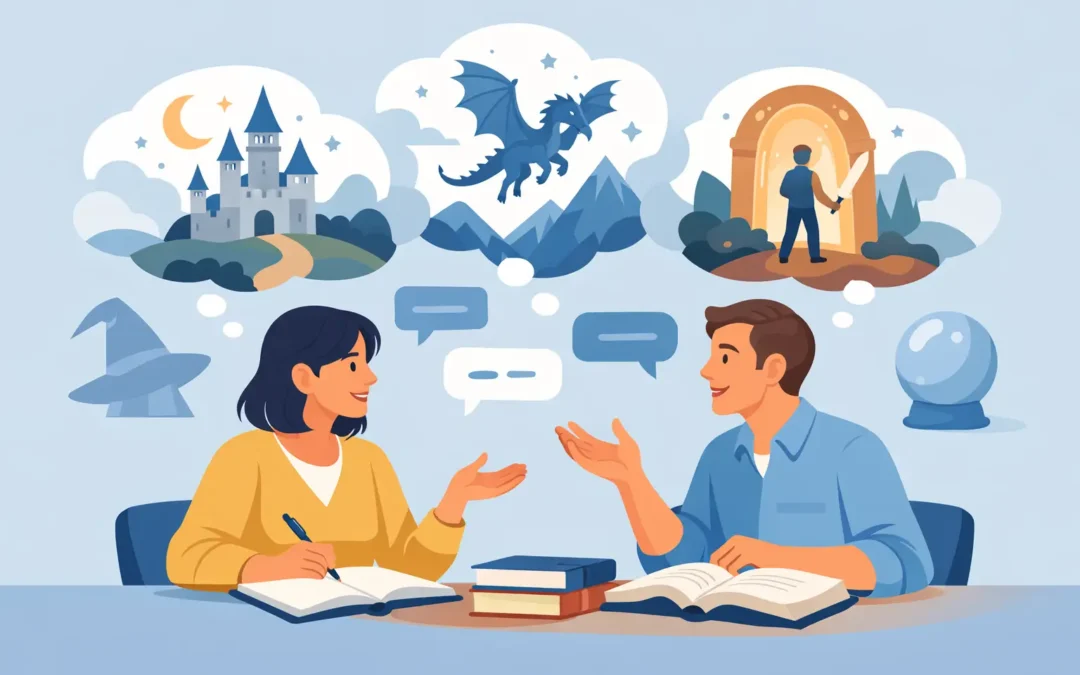
by | Jul 5, 2026 | Uncategorized
The best classroom conversations about fantasy usually begin right after a child says, “But what if magic were real?” That question opens more than plot analysis. It opens a path into courage, belonging, grief, fairness, friendship, and the quiet ways young people learn who they are. Strong teacher discussion questions for fantasy novels help students step through that door and come back with something true.
For middle grade readers, fantasy matters because it gives shape to feelings that can be hard to name in realistic fiction alone. A cursed object can stand in for fear. A hidden library can represent hope. A magical test can reflect the pressure of growing up. When teachers ask the right questions, students begin to see that the impossible parts of a story often reveal the most human ones.
Why fantasy works so well in class
Fantasy invites students to think on two levels at once. They can enjoy the wonder of enchanted forests, strange creatures, and secret powers, while also tracing the emotional stakes underneath. That makes the genre especially useful in upper elementary and middle school classrooms, where readers are ready for deeper interpretation but still need an entry point that feels vivid and engaging.
It also creates room for students who may not rush to share personal experiences directly. Talking about a character facing a magical curse can feel safer than talking about loneliness, embarrassment, or family stress in their own lives. The conversation stays rooted in the book, yet empathy grows naturally.
That is why discussion questions should do more than check comprehension. A useful question does not just ask what happened. It asks why it mattered, how it changed a character, and what that moment might mean to a reader.
How to build better teacher discussion questions for fantasy novels
A good question meets students where they are, then nudges them one step further. In fantasy, that usually means moving from the world of the story into the heart of the story.
Start with concrete observations. Ask students to notice the rules of magic, the setting, or a character’s choices. Then move toward interpretation. Why do those rules matter? What does the setting reveal about power or fear? What does a character’s choice cost them? Finally, invite reflection. Have students connect the story to another text, a real-world issue, or a personal value like honesty, loyalty, or resilience.
The sequence matters. If you begin with a huge abstract question, some students will freeze. If you begin with details they can point to in the text, they gain confidence and evidence. From there, richer discussion becomes possible.
Discussion question types that lead to richer conversations
Questions about worldbuilding
Fantasy worlds can be dazzling, but they should never be treated as decoration only. Ask students what the world rewards and what it punishes. Who has power in this setting, and who is left out? Are magical rules fair, or do they benefit certain groups? These questions help students see that worldbuilding often mirrors social structures in the real world.
You can also ask what the setting reveals about mood. Does the magical place feel welcoming, unstable, secretive, or dangerous? How does that shape the reader’s expectations? Students often notice more than adults expect when they are invited to look closely.
Questions about character growth
Fantasy protagonists are often called to do something extraordinary, but the most memorable growth is usually inward. Ask what the character believes about themselves at the start of the book. Do they feel brave, invisible, powerless, angry, or unsure? Then ask what challenges those beliefs.
This kind of question helps students move beyond simple labels like brave or kind. They begin to talk about change, contradiction, and emotional complexity. A child can be frightened and still act with courage. A loyal friend can make a selfish choice. Fantasy gives those tensions dramatic form.
Questions about symbols and magic
Magic is often the clearest road into theme. If an object, ability, or creature keeps appearing, ask what it might represent. A magical book may mean knowledge, escape, or responsibility. A disappearing path may reflect uncertainty. A voice only one child can hear may stand for intuition, memory, or loneliness.
There is a trade-off here. Some students love symbolic thinking, while others feel as if they are guessing what the teacher wants. The solution is to keep the text at the center. Ask, “What makes you think that?” and “Which scene supports your idea?” That keeps interpretation open without making it vague.
Questions about theme and real life
Once students have explored the fantasy elements, they are ready for the deeper human questions. Ask what the story says about friendship when trust is tested. Ask what it suggests about power when someone weak is overlooked. Ask whether the novel treats hope as a feeling, a choice, or both.
For middle grade readers, these questions work best when they stay close to lived experience. Instead of asking for broad moral statements, ask about moments of decision. When did the character choose kindness over pride? When did fear lead to a mistake? When did asking for help become an act of strength?
Sample teacher discussion questions for fantasy novels
The most effective questions are open enough to invite thought but focused enough to guide it. These can work in read-alouds, literature circles, whole-class discussions, or small groups.
What does the magical element in this story make possible that realistic fiction might not?
What are the rules of the fantasy world, and why do those rules matter to the conflict?
Which character has the least power in this story at first? Does that change by the end?
What does the main character want on the surface, and what do they need emotionally?
When does the fantasy setting feel safe, and when does it feel threatening? What creates that shift?
What object, place, or creature in the story seems symbolic? What might it represent?
How does the novel show the difference between being chosen and choosing for yourself?
What sacrifices does the character make, and were they worth it?
How does friendship function in this story? Is it protection, challenge, healing, or something else?
What real-life issue or feeling is reflected through the fantasy plot?
Does the story suggest that power changes people? Why or why not?
Which scene feels most emotionally true, even though the story is fantastical?
What does the ending offer: closure, hope, ambiguity, or a new question?
These questions work because they invite students to return to the text while also trusting their own responses. That balance is where thoughtful classroom talk begins.
Adjusting questions for grade level and reading maturity
Not every group needs the same kind of question. A fourth-grade class may respond beautifully to prompts about fairness, bravery, and belonging, while older middle grade readers may be ready to talk about systems of power, moral ambiguity, or the cost of secrecy.
It also depends on the novel itself. Some fantasy books are plot-driven and fast-paced, with clear good and evil. Others are quieter and more layered, using magic to explore grief, poverty, identity, or community change. A book with emotional realism beneath its fantasy elements often benefits from slower, more reflective questions.
Teachers know this instinctively, but it helps to remember that depth does not always mean difficulty. Sometimes the strongest question is also the simplest: Why did this moment matter so much?
Creating a classroom where students want to talk
Even strong questions can fall flat if students feel there is a single right answer. Fantasy discussion works best when curiosity leads and textual evidence supports. Invite multiple interpretations. Let students disagree kindly. Ask follow-up questions that expand rather than shut down the conversation.
It also helps to honor wonder. Not every discussion has to race toward theme. If students are fascinated by the map, the magical rules, or the eerie house at the edge of town, start there. Engagement is not a distraction from analysis. It is often the path into it.
For teachers using emotionally rich middle grade fantasy, there is special value in noticing where wonder and hardship meet. A story can hold enchantment and struggle at the same time. In books such as The Book Witch, that combination can help students explore difficult realities through a lens that still leaves room for hope.
What students remember after the discussion ends
Students rarely remember every question a teacher asks. They do remember how a book made them feel and whether the conversation made that feeling clearer, deeper, or more meaningful. The right question can help a child realize that a fantasy novel is not just about magic. It is about being afraid and going on anyway. It is about being unseen and still believing you matter.
When discussion questions are shaped with care, fantasy becomes more than a genre study. It becomes a place where young readers practice empathy, courage, and interpretation all at once. That is a powerful thing to offer a classroom, and often, it starts with one thoughtful question.