
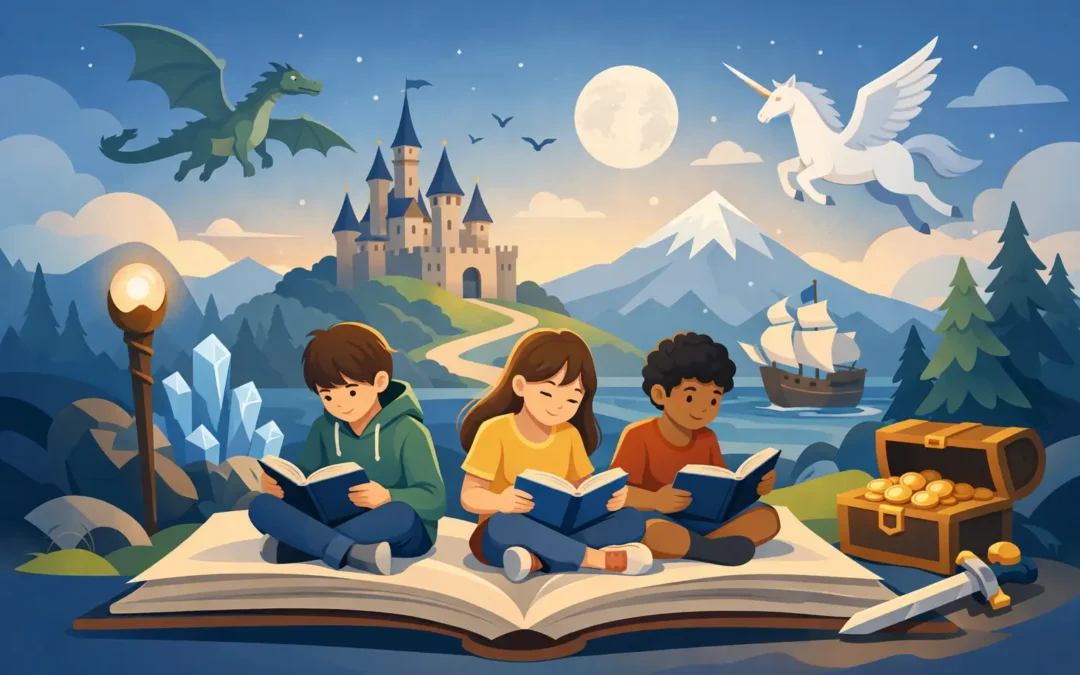
Some children want dragons. Some want spells. Some want a hidden library, a mysterious key, or one brave kid who discovers that ordinary life is not as ordinary as it looks. The best fantasy books for middle grade readers make room for all of that. They offer wonder, yes, but they also speak to the real feelings kids carry every day – loneliness, courage, friendship, fear, hope, and the quiet wish to matter.
That balance is what makes middle grade fantasy so lasting. A magical story can sweep a reader into another world, but the books children return to are usually the ones that understand something true about growing up. For readers ages 8 to 12, fantasy works best when it does more than entertain. It gives language to big emotions, offers safe distance from hard topics, and reminds children that change is possible.
What makes fantasy books for middle grade stand out
Middle grade fantasy sits in a special place. It is not quite the gentle simplicity of early chapter books, and it is not the darker, more layered territory of young adult fiction. It meets readers at a moment when imagination is still wide open, but questions about identity, belonging, and fairness are becoming sharper.
That is why tone matters so much. A strong middle grade fantasy novel can hold danger and uncertainty, but it should still leave room for wonder. Young readers can handle high stakes. In fact, they often love them. What they do not need is hopelessness for its own sake. The most memorable books in this category trust kids with emotional truth while still offering light.
Voice matters too. Children in this age range know when a story is talking down to them. They respond to characters who feel specific, funny, flawed, and brave in believable ways. Even in the most enchanted setting, the emotional center has to feel real.
Why kids and adults look for different things
When adults search for fantasy books for middle grade, they often bring one set of questions. Is it age-appropriate? Is the reading level right? Does it offer meaningful themes? Could it work in a classroom, book club, or library display?
Kids usually start somewhere else. They want to know if the story is exciting, if the magic feels vivid, and whether the main character is someone worth following. They want surprise. They want movement. They want a world that feels bigger on the inside than it first appears.
The best middle grade fantasy satisfies both groups without sounding like it was built by committee. A child should be able to fall in love with the adventure. A parent, teacher, or librarian should be able to see the deeper layers without those layers taking over the story.
That is often the difference between a book that gets assigned and a book that gets passed from one reader to another with real enthusiasm.
The themes that give fantasy its staying power
Magic may open the door, but theme is what helps a story stay with a reader after the last page. In middle grade fantasy, a few themes show up again and again because they match the emotional landscape of childhood so closely.
Belonging is one of the biggest. Many fantasy stories begin with a child who feels out of place, unheard, or underestimated. The magical journey becomes more than an adventure. It becomes a way of asking, Where do I fit, and who sees me clearly?
Friendship is another cornerstone. In strong middle grade fiction, friendships are rarely perfect. They are tested by secrets, mistakes, jealousy, and fear. That realism matters. Children are still learning how to be good friends and how to forgive when things get messy.
Fantasy also creates a powerful space for talking about hardship. A story with witches, hidden worlds, or enchanted books can approach poverty, grief, family instability, or self-doubt in ways that feel gentle enough for younger readers to process. Sometimes a magical setting makes emotional truth easier to face because it gives the reader breathing room.
That is part of the lasting appeal of books like The Book Witch, where wonder and struggle can live side by side. Children do not need stories that pretend life is easy. They need stories that tell them hard things can be faced with courage, kindness, and imagination.
How to choose middle grade fantasy for a specific reader
Not every child wants the same kind of fantasy, and that is worth remembering before handing over a highly praised title. One reader may love fast-paced quests and creatures. Another may prefer quieter magic rooted in family, books, or community. Some readers are ready for eerie tension. Others want fantasy that feels comforting and bright.
A good starting point is to think about what the child already loves outside of books. If they are drawn to mysteries, look for fantasy with secrets, clues, and hidden histories. If they care deeply about friendships and school dynamics, choose stories where the magic supports character growth rather than overpowering it. If they adore libraries, folklore, or bookish settings, there is a rich corner of middle grade fantasy waiting for them.
It also helps to consider emotional readiness, not just reading level. Two ten-year-olds may read at the same grade level but respond very differently to danger, loss, or suspense. A thoughtful recommendation meets the child where they are, not where an age label says they should be.
Signs a middle grade fantasy book has real heart
Plenty of fantasy novels have clever premises. Fewer have emotional depth. One easy way to tell the difference is to look at what the magic reveals.
Does the magical element simply create spectacle, or does it expose something true about the character? A hidden doorway can symbolize longing. A curse can reflect shame or fear. A mysterious book can become a mirror for a child who is trying to understand their own worth.
Another sign is whether secondary characters matter. In heartfelt middle grade fantasy, friends, siblings, caregivers, and mentors are not just props for the hero’s journey. They shape the emotional world of the story. Their presence makes the stakes feel personal.
Finally, listen for hope. Not forced cheerfulness, and not a perfectly tidy ending. Hope in middle grade fantasy is often quieter than that. It might look like a child asking for help, standing up for a friend, or discovering strength they did not know they had. That kind of hope feels earned, and young readers recognize the difference.
Why fantasy still matters in a very real world
Adults sometimes worry that fantasy is an escape from reality. But for many children, fantasy is actually a way into reality. It gives shape to fears that are hard to name and offers models of resilience that feel vivid and memorable.
A child who reads about a character facing impossible odds may not be battling a sorcerer, but they may be dealing with a move, a tight family budget, a friendship fracture, or the feeling of being overlooked. Fantasy reframes those experiences without minimizing them. It says, what you are facing is real, and you are not small because it feels hard.
That is one reason teachers and librarians often return to this genre. It invites discussion without becoming heavy-handed. It encourages empathy. It gives children stories where bravery is not about being fearless. It is about choosing kindness, honesty, or persistence when things feel uncertain.
A good fantasy book leaves a door open
The finest fantasy books for middle grade do not just entertain for a weekend. They leave something behind. Sometimes it is a new favorite character. Sometimes it is a feeling of comfort. Sometimes it is the first spark that turns a casual reader into a lifelong one.
For the adults choosing books, that means looking beyond flashy premises and asking what kind of emotional experience a story offers. For young readers, it means trusting their own sense of wonder and following the stories that make them feel seen.
A truly memorable fantasy novel opens a hidden door, but it also leaves one open after the final page – a door toward empathy, courage, and the belief that even in difficult chapters, a little magic can still help us find our way.