
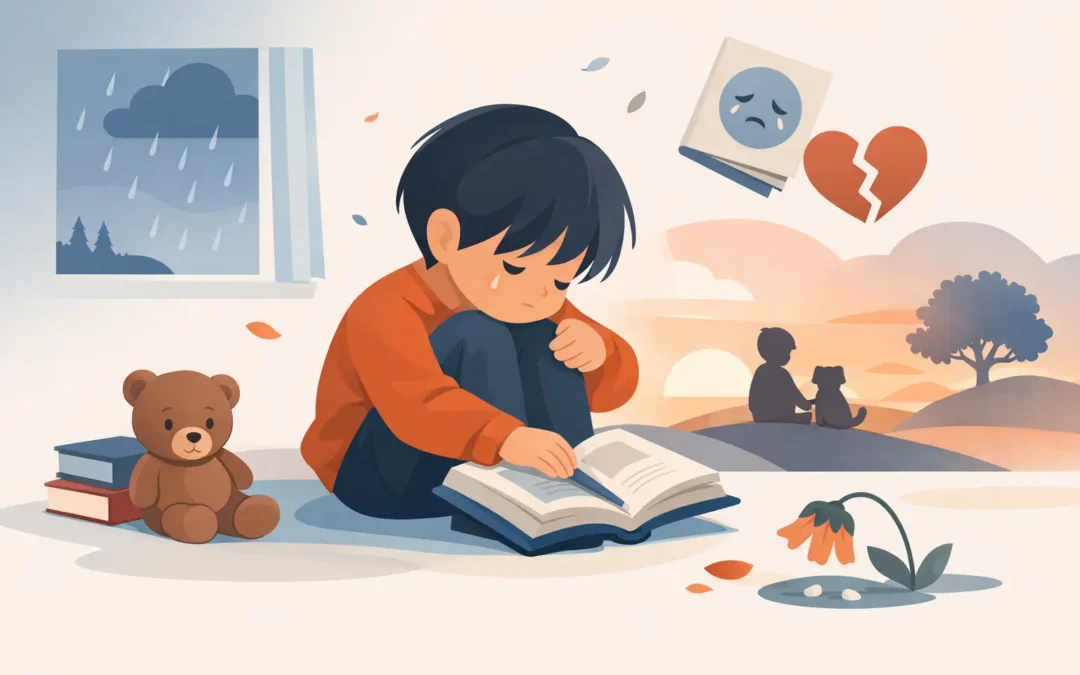
A child sits very still while reading, then suddenly asks, “Why did that happen to her?” That moment can make adults hesitate. Are sad books good for kids, or do they place too much weight on young hearts? It is a fair question, especially for parents, teachers, and librarians trying to put the right story into the right hands.
The short answer is yes, often. Sad books can be very good for kids when they are age-appropriate, emotionally honest, and shaped with care. Children do not need stories that pretend life is painless. They need stories that help them name hard feelings, see that struggle is survivable, and trust that tenderness and hope still belong in the world.
Why are sad books good for kids?
Children already know sadness exists. They see friendship troubles, family stress, loss, unfairness, loneliness, and fear in their own lives and in the lives around them. A book does not introduce pain so much as give it language. That matters.
A strong sad story can do something remarkable. It lets a child feel deeply while staying safe. The page becomes a little bridge between emotion and understanding. A young reader can grieve with a character, worry with them, and root for them, all while knowing they can close the book, ask a question, or read beside a trusted adult.
That is very different from overwhelming a child. The best middle grade books do not hand children despair and walk away. They create room for feeling, then offer movement – toward courage, connection, self-knowledge, or healing. The sadness is part of the journey, not the whole destination.
Sad stories teach empathy without preaching
Many adults want books to build empathy, but empathy is not usually taught through lectures. It grows through story. When a child spends two hundred pages inside someone else’s hopes, fears, and disappointments, they begin to understand that people carry hidden burdens.
This is one reason emotionally rich fiction matters so much in the middle grade years. Children ages 8 to 12 are developing a stronger moral imagination. They are beginning to ask bigger questions about fairness, identity, and belonging. A sad book can help them feel those questions rather than simply hear about them.
For example, a story about a child facing poverty or family instability can gently widen a reader’s view of the world. It can help them recognize that classmates, neighbors, and friends may be carrying unseen worries. When that story also includes warmth, humor, or wonder, the lesson does not feel heavy-handed. It feels human.
Are sad books good for kids’ emotional growth?
Yes – but the real benefit is not that children become sad. It is that they become more emotionally literate.
Kids need practice recognizing complex feelings. Not every hard emotion is just “sad.” Sometimes it is embarrassment, disappointment, guilt, homesickness, jealousy, grief, or the ache of wanting to belong. Books give these feelings shape. They show what they look like in action and what people do with them.
This kind of reading can also reassure children that strong emotions are not signs that something is wrong with them. A child who feels deeply may see a character cry, shut down, act out, or struggle to explain themselves and think, “Oh. Someone else feels like this too.” That recognition can be quietly powerful.
There is also value in seeing recovery. A well-written sad book often shows that feelings change. A lonely character finds a friend. A frightened one tells the truth. A child who feels powerless discovers a small but meaningful kind of bravery. These are not perfect endings, and they do not need to be. What matters is that the story makes space for hope that feels earned.
Not every sad book is right for every child
This is where the answer becomes more nuanced. Sad books can be good for kids, but not every sad book is good for every kid at every moment.
One child may find a tender story about loss comforting. Another may find the same story too close to home. A reader dealing with anxiety might love emotionally intense books when read with support, or they might need lighter stories for a while. Neither response is wrong.
Adults sometimes worry that avoiding sad books will protect children. Sometimes it does make sense to pause or postpone a title. Timing matters. So does temperament. But avoiding all emotional depth can leave kids with a reading life that feels thin and unreal.
A better question than “Is this book sad?” might be “How does this book handle sadness?” Does it treat children’s emotions with care? Does it offer context and connection? Does it leave the reader with some sense of meaning, possibility, or comfort? Those are better signs than a simple happy-or-sad label.
What makes a sad book healthy rather than harmful?
The difference usually comes down to craft and care. A healthy sad book does not use pain as a trick to shock readers. It does not wallow. It tells the truth in an age-appropriate way.
That often means the book balances sorrow with other emotional colors – friendship, humor, curiosity, wonder, even mischief. Children can handle hard things in fiction when the story remembers that life is not made of only one feeling. The most memorable middle grade novels understand this well. They let grief and joy sit at the same table.
It also helps when children are not left alone inside the darkness. They might have one trustworthy adult, one loyal friend, one magical discovery, or one inner spark that keeps the story moving forward. Hope does not have to look shiny or simple. Sometimes hope is just a character deciding to try again tomorrow.
That blend of realism and light is often what makes a book linger in the heart.
How adults can choose sad books wisely
Parents, teachers, and librarians do not need to fear emotionally resonant books, but they can be thoughtful about selection.
Consider the child’s age, yes, but also their sensitivity, recent experiences, and reading habits. Some children like to process feelings through fiction. Others need a gentler on-ramp. Reviews from trusted children’s literature sources can help, and so can knowing a book’s overall emotional arc before handing it over.
It is also helpful to remember that difficult themes and hopeless themes are not the same. A book can include poverty, grief, bullying, or family conflict and still be deeply life-giving. What matters is whether the story offers dignity, insight, and some believable path forward.
If a child is reading a sad book, a simple conversation can make all the difference. Ask what they are thinking about the character. Ask what part felt unfair, or brave, or true. You do not need to turn every novel into a lesson. Just opening the door is often enough.
The special power of sad books with hope
For middle grade readers especially, the most meaningful stories are often the ones that hold both ache and wonder. Children this age are old enough to recognize hardship but young enough to still believe in possibility. Good books meet them in that in-between place.
That is one reason stories with emotional depth and a thread of magic can feel so powerful. Wonder gives children breathing room. It lets them face real struggles without being crushed by them. A story can talk about instability, shame, or loneliness while still offering enchantment, beauty, and surprise. In books like that, hope does not erase pain. It helps carry it.
When young readers encounter stories that honor hardship without surrendering to it, they learn something lasting: being sensitive is not weakness, and sadness is not the end of the story.
So, are sad books good for kids?
Often, yes. They can help children grow kinder, braver, and more capable of understanding both themselves and others. They can offer comfort to readers who feel alone and perspective to readers who do not yet know someone else’s struggle. They can remind children that hard feelings can be spoken, survived, and shared.
The key is not to choose books that are sad for sadness’ sake. Choose stories with heart. Choose stories that trust children with truth and also leave a lantern lit. That is where the deepest reading lives.
And sometimes the book that brings tears is also the one a child hugs to their chest afterward, because for the first time, they feel seen.