
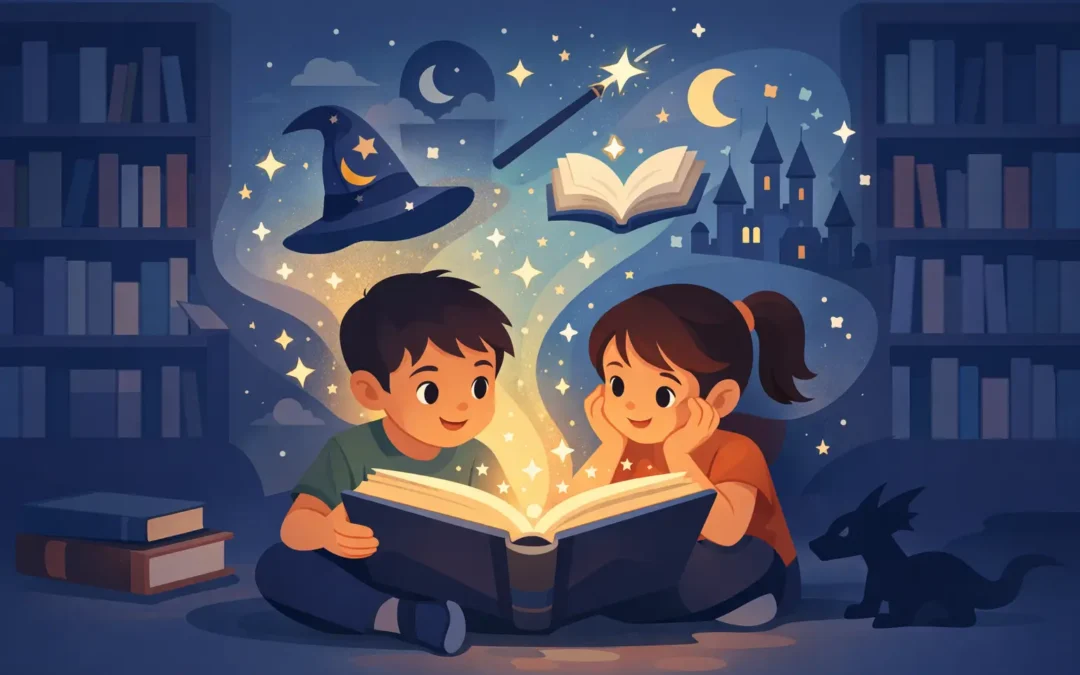
A child slips between the shelves looking for one ordinary book and finds something far bigger – a secret, a doorway, a second chance, a piece of courage they did not know they needed. That is the special pull of library magic books. They promise wonder, yes, but they also offer something quieter and just as powerful: the feeling that stories can meet you exactly where you are.
For middle grade readers, that feeling matters. These are years when kids are asking big questions about belonging, fairness, friendship, and who they might become. A magical library story wraps those questions in adventure. It lets readers follow clues, open hidden rooms, and meet impossible things while staying close to emotions that feel very real.
What makes library magic books so irresistible?
Part of the appeal is easy to understand. Libraries already feel a little enchanted. They are full of whispers, mysteries, old pages, and lives you can step into without leaving your chair. For kids, that setting does half the storytelling before the first magical event even happens.
But the best library magic books do more than sprinkle spells over bookshelves. They turn the library into a symbol of possibility. In these stories, knowledge is not cold or distant. It is alive. It glows, hides, protects, remembers, and sometimes demands bravery from the person who finds it.
That mix is especially powerful for readers ages 8 to 12. A castle can feel far away. A magical kingdom might seem like pure fantasy. A library, though, is real. Many children know the smell of the stacks, the hush of turning pages, the thrill of checking out a book that feels chosen just for them. When magic appears there, it feels wonderfully close.
Library magic books and the heart of middle grade fiction
Middle grade fiction works best when it respects a child’s imagination and emotional life at the same time. That is where this kind of story shines. The enchantment draws readers in, but the deeper reason they stay is that the magic usually connects to something human.
Sometimes the child at the center of the story feels unseen. Sometimes home is unstable. Sometimes money is tight, friendships are shaky, or the future feels uncertain. A magical library does not erase those problems. It gives the character a way to face them.
That distinction matters. Children do not need stories that pretend life is easy. They need stories that leave room for hardship without becoming hopeless. Library-centered fantasy often does this beautifully because books themselves represent help, memory, and survival. A story hidden on a shelf can become a lifeline. A librarian can become a guide. A mysterious book can show a child not just where the magic is, but where their own strength lives.
This is one reason adults are drawn to these books too. Parents, teachers, and librarians often look for stories that are imaginative enough to excite young readers while still offering emotional substance. A strong magical library story can do both without feeling heavy-handed.
The setting does more than create atmosphere
A library is not just a pretty backdrop for sparkly adventures. In the strongest books, the setting shapes the stakes.
A hidden archive might hold family secrets. A checkout desk might become the place where a lonely child is finally noticed. A forgotten corner shelf might protect stories others have tried to silence. Because libraries are tied to memory and access, the conflicts in these books often carry extra weight.
That is also where nuance comes in. Not every library magic story is soft and cozy. Some are eerie. Some are funny. Some lean whimsical, while others are more grounded and tender. It depends on the reader and on the kind of emotional journey the book is trying to create.
For a younger or more sensitive reader, a gentler tone may be the best fit – enough mystery to spark curiosity, but not so much darkness that the story feels overwhelming. For older middle grade readers, a little more tension can raise the emotional reward. The setting can hold both.
Why these stories stay with readers
Ask kids what they remember from beloved books, and they often mention one vivid image: a key, a staircase, a glowing page, a room no one else knew existed. Library magic books are full of those moments. They create scenes that feel almost touchable.
Still, memorable imagery is only part of the reason these books linger. The deeper reason is emotional recognition. A child who feels overlooked may see themselves in a character who discovers that books notice what people miss. A reader facing change may find comfort in a story where knowledge becomes a lantern in the dark.
These books quietly say: you are not silly for hoping, and you are not alone in being afraid.
That message can be especially meaningful for children dealing with challenges they do not always have words for. Financial stress, housing instability, family conflict, and self-doubt can be difficult topics to approach directly. In fantasy, those feelings can be transformed into quests, curses, missing pages, or threatened libraries. The metaphor makes the truth easier to hold.
Choosing the right library magic books for kids
Not every magical library story will fit every child, and that is a good thing. Readers are wonderfully different.
Some children want fast-moving adventure with puzzles, secret passages, and high stakes. Others want a more tender story where the magic unfolds slowly and the emotional world takes center stage. Some are ready for layered themes about identity and hardship. Others are simply looking for a story that makes them feel safe, brave, and eager to keep reading.
For adults choosing books, it helps to think beyond the word magic. Ask what kind of emotional experience the child wants. Do they love mystery? Are they drawn to stories about friendship? Do they need humor right now, or comfort, or a character who starts out unsure of their own worth and grows stronger page by page?
That is often a better guide than age range alone. Two ten-year-olds can want very different things from a book. One may race toward suspense. Another may connect most deeply with warmth and heart.
It is also worth considering what the story believes about books themselves. The most satisfying library fantasies tend to treat reading as active, not passive. Books are not wallpaper. They shape choices. They preserve hidden truths. They help characters imagine a different future.
Why librarians, teachers, and parents keep returning to this genre
There is a practical reason adults love these stories, and it is not just that they are charming. Library magic books can help bridge the gap between reluctant readers and confident ones.
A child who is unsure about reading may be more willing to try a story that makes books feel alive and full of danger or wonder. The premise itself can lower resistance. Instead of presenting reading as homework, these books present it as discovery.
In classrooms and book groups, they also open up rich conversations. Kids can talk about courage, fairness, secrecy, community, and who gets access to knowledge. They can discuss why libraries matter in real life, not just in fiction. And because the stories are imaginative, those discussions often feel less intimidating.
For librarians especially, these books carry an extra layer of joy. They reflect back the quiet importance of library spaces. They remind children that a library is not just where books are stored. It is a place where curiosity is welcomed, questions are allowed, and lives can change in small but lasting ways.
When a magical book finds the right reader
There is something beautiful about a story in which a child finds the exact book they need. In real life, that happens more often than adults sometimes realize.
A reader picks up a novel for the mystery and ends up finding comfort. Another comes for the fantasy and leaves with a new sense of courage. A child who has felt alone recognizes themselves in a character who learns that being ordinary on the outside says nothing about what lives within.
That is the quiet promise at the center of the best library magic books. They celebrate wonder, but they never forget the reader holding the book. They know that enchantment is not just about spells. Sometimes it is about being seen. Sometimes it is about hope arriving in paper form.
Stories like these are a natural fit for readers who love heart as much as mystery, and that is part of why books like The Book Witch resonate. They understand that magic is sweetest when it stands beside friendship, resilience, and the belief that even a child facing hard things can still find light.
The right story will not solve every problem waiting outside the library doors. But it can hand a young reader courage, curiosity, and one bright reason to keep turning the page.