
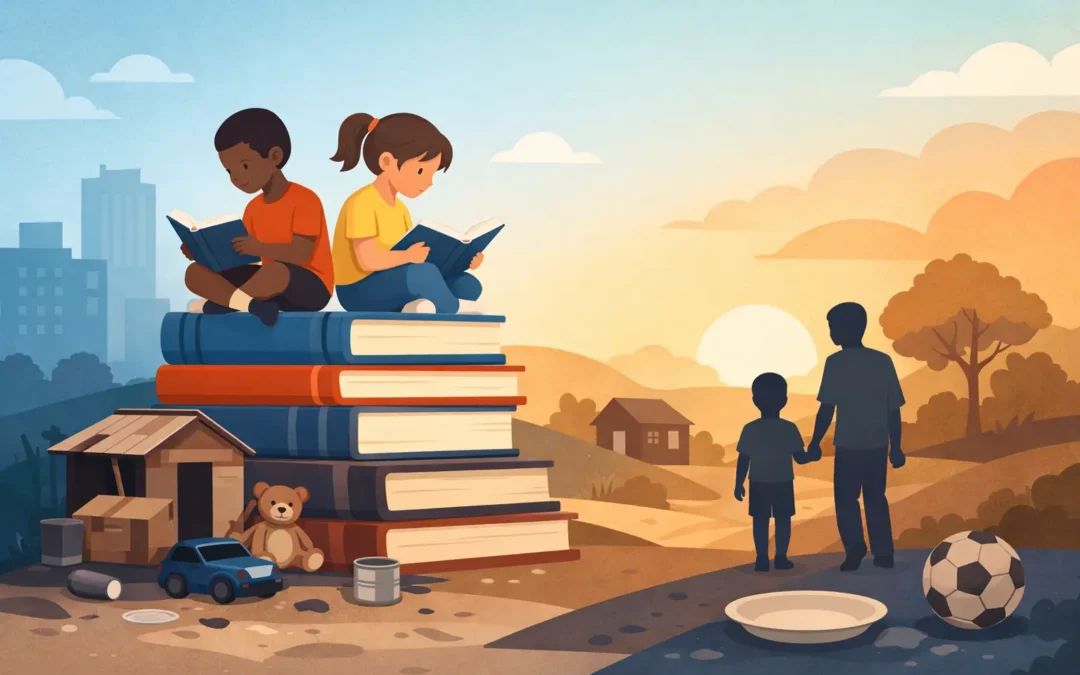
Some children recognize money stress long before they have words for it. They notice the lights turned off to save on bills, the way a parent says, “not this time” in a store, or the embarrassment of needing help at school. The best books for kids dealing with poverty do not flatten those experiences into a lesson. They make room for dignity, worry, humor, and hope.
For middle grade readers especially, stories about financial hardship can be deeply reassuring when they are handled with care. A child may not want a book that feels like a lecture on social issues. They want a real story – one with a memorable voice, believable stakes, and characters who feel more than their circumstances. Adults, meanwhile, are often looking for books that open conversation without overwhelming a young reader. That balance matters.
What makes books for kids dealing with poverty helpful?
A strong book in this space does more than mention a family struggling with money. It shows how poverty can shape everyday choices – housing, food, school life, friendships, transportation, and a child’s sense of safety – without reducing a character to hardship alone. The most meaningful stories also leave room for joy. Kids still joke, imagine, dream, and care about ordinary things, even in difficult seasons.
That is often the difference between a book that feels true and one that feels assigned. Children can tell when a story is only trying to teach them something. They respond more readily when the emotional life of the character comes first.
It also helps when a book respects the many forms poverty can take. For one child, it may look like couch surfing and instability. For another, it may mean a working parent stretched too thin, food insecurity, or living in a motel. Not every young reader will see their exact experience on the page, but they may still feel seen in the emotions underneath it.
12 books for kids dealing with poverty
Front Desk by Kelly Yang
This is one of the clearest recommendations for upper elementary and middle grade readers. Mia lives in a motel run by her immigrant parents, and the story captures long work hours, financial pressure, and the constant calculations families make to stay afloat. It is warm, funny, and fast-moving, but it never pretends things are easy. That balance makes it especially effective for classroom and family discussion.
A Shelter in Our Car by Monica Gunning
For younger readers, this picture book offers an accessible but honest look at homelessness and instability. Zettie and her mother sleep in their car while her mother searches for work and safety. The story is gentle enough for a read-aloud, yet it leaves room for hard questions children may already be carrying.
Last Stop on Market Street by Matt de la Pena
This picture book does not present poverty as a tidy problem with a tidy answer. Instead, it invites readers to notice beauty, community, and perspective without denying need. CJ and his grandmother move through a city landscape where wealth and hardship exist side by side. It is a lovely choice for conversations about empathy and how people see the world differently.
Those Shoes by Maribeth Boelts
Sometimes poverty appears in childhood through one painful, specific object. In this case, it is a pair of trendy shoes a boy cannot afford. The story understands how social pressure works among children and how badly kids can want to fit in. It is simple, memorable, and especially useful for talking about want versus need without shaming anyone.
Crenshaw by Katherine Applegate
This novel weaves imagination into a story about food insecurity and family instability. Jackson’s family is struggling again, and the return of his giant imaginary cat, Crenshaw, reflects both fear and longing. For readers who need emotional truth softened by wonder, this one can be especially powerful. It acknowledges how frightening instability feels while protecting a child’s sense of possibility.
Fly Away Home by Eve Bunting
A boy and his father secretly live in an airport, trying to remain unnoticed. The story is quiet, sad, and deeply human. Because it is restrained, it often lingers with readers. It works well for children who are ready to consider how hidden poverty can be and how easily others’ struggles go unseen.
Lulu and the Hunger Monster by Erik Talkin
Food insecurity is often underrepresented in children’s books, which makes this title especially valuable. Lulu’s family is short on money, and hunger becomes a “monster” she must face. The metaphor gives younger readers a way into a very real issue, while the story stays grounded in the emotional experience of not having enough.
How to Steal a Dog by Barbara O’Connor
This middle grade novel follows Georgina, who is living in a car with her family and making increasingly desperate choices. What makes the book stand out is its refusal to simplify her. She is ashamed, hopeful, funny, and flawed. Readers may not agree with her decisions, but they will understand where they come from.
The Hundred Dresses by Eleanor Estes
This classic remains relevant because it shows how economic difference can affect school belonging. Wanda is mocked for wearing the same faded dress every day. The story is as much about cruelty and regret as it is about poverty itself, and that can make it an important bridge book for talking about class and kindness in a school setting.
Free Lunch by Rex Ogle
For older middle grade readers, this memoir is direct and emotionally honest. It explores hunger, shame, family stress, and the social visibility of receiving free school lunch. This is not the right fit for every child, because its realism is sharper than some of the other books here. But for the right reader, it can feel startlingly validating.
Esperanza Rising by Pam Munoz Ryan
Though this novel is shaped by historical and cultural context, it gives readers a strong portrait of sudden economic loss and the shock of status changing overnight. Esperanza must rebuild her understanding of work, family, and self-worth. It is especially meaningful for readers ready for a richer, layered novel about resilience.
The Book Witch by K.L. Baxton
Stories that blend magic with real struggle can offer children a gentler doorway into difficult feelings. In a novel like The Book Witch, themes of poverty, family instability, and self-worth live alongside imagination, friendship, and the healing pull of books. That combination can be a gift for readers who need honesty, but also need wonder.
How to choose the right book for a child
The best choice depends on what the child needs right now. Some young readers want direct realism because they are looking for recognition. Others need a little distance – humor, fantasy, or a picture book format that helps them approach a hard subject safely.
Age matters, but readiness matters more. A ten-year-old who has lived through housing instability may connect immediately with a story another ten-year-old finds too intense. Adults know this instinctively, yet it helps to trust it. Matching the book to the child’s emotional bandwidth is often more important than matching it to a reading level chart.
It is also worth thinking about what role the book will play. Is it for private comfort, a classroom conversation, a counseling resource, or a family read-aloud? A title that works beautifully in one setting may feel too exposed in another. Books about poverty can be healing, but only when they are offered with care rather than pressure.
Talking about poverty with young readers
When a child finishes one of these stories, the first question does not have to be, “What did you learn?” A gentler opening works better. You might ask which character felt most real, which part made them angry, or whether anything in the book reminded them of something they have seen. That leaves room for reflection instead of performance.
It also helps not to rush toward a moral. Children are often still sorting through feelings like embarrassment, fear, jealousy, or relief. If a story has done its job, it has made those feelings visible. The adult’s job is not to tie them up neatly, but to make them safe to name.
For educators and librarians, there is another layer. Books for kids dealing with poverty should not be used in ways that single out children who are already vulnerable. A story can build empathy across a group, but only if it is introduced with sensitivity. No child wants to feel that a book has been placed in the room as a spotlight.
A good story cannot fix hunger or housing instability. It cannot solve what is unfair. But it can do something quieter and still powerful. It can tell a child, with tenderness and truth, that struggle does not erase imagination, worth, or the right to be seen.