
by | Jun 9, 2026 | Uncategorized
A child goes quiet halfway through a chapter. Not bored – thoughtful. They have just met a character who hides hunger, misses a parent, or says the wrong thing and regrets it all night. That pause matters. It is often where how to teach empathy with novels begins: not with a lecture, but with a story that lets a reader feel someone else’s life from the inside.
For parents, teachers, and librarians, that is one of fiction’s quiet gifts. A good novel can help kids practice noticing emotions, questioning assumptions, and caring about people whose experiences look different from their own. Middle grade books are especially powerful here because they meet readers at an age when friendship, fairness, belonging, and identity feel huge. The right story does not force a lesson. It opens a door.
Why novels work so well for empathy
Empathy grows when children have a chance to imagine what another person feels, wants, fears, or misunderstands. Novels give them time to do that. A short scene can spark sympathy, but a full story asks readers to stay with a character through mistakes, mixed feelings, and change.
That staying power matters. Kids do not just learn that a character is lonely or brave. They begin to understand why. They see the pressures around that character, the invisible worries, the moments when choices are not neat or easy. In real life, that kind of understanding is hard to teach through rules alone.
There is also a useful bit of safety in fiction. A child may not be ready to talk directly about poverty, family instability, bullying, or feeling left out in their own life. But they may be willing to talk about a character first. That little bit of distance can make honest reflection possible.
How to teach empathy with novels in real life
The biggest mistake adults make is treating empathy like a quiz with right answers. Children can usually tell when a discussion is steering them toward a moral printed in invisible ink. A better approach is to stay curious.
Start by choosing novels with emotional texture. That means characters who feel real, not perfect. Look for stories where children face meaningful conflicts, where side characters are not flat stereotypes, and where the book leaves room for readers to wrestle with more than one truth at once. A hopeful tone helps, especially for middle grade readers, but hope does not require simplicity.
Once you have the book, slow down enough to notice key moments. You do not need a full lesson plan for every chapter. Often one or two thoughtful pauses are more effective than constant analysis. When a character makes a surprising choice, hides a feeling, or misreads someone else, that is your opening.
Ask questions that invite imagination rather than performance. What do you think this character wishes someone understood about them? When did their feelings change? Why might two characters remember the same event differently? Those questions move children beyond plot recall and into perspective-taking.
It also helps to make space for uncertainty. Sometimes a child will say, “I do not know why she did that.” That is not a dead end. It is the beginning of empathy. Not understanding someone right away is normal. The next step is wondering instead of judging.
Focus on inner life, not just behavior
Many children are used to adults asking whether a character made a good choice or a bad one. That has its place, but empathy deepens when we ask what sits underneath the behavior.
A child who snaps at a friend may be scared. A class clown may be lonely. A boastful character may be covering embarrassment. When readers learn to look below the surface in books, they start practicing a skill they can use everywhere else.
That does not mean excusing hurtful actions. It means holding two ideas at once: behavior has consequences, and people are often carrying more than we can see. That balance is one of the most valuable things novels can teach.
Let children connect, but do not force confession
Personal connection can be powerful, but it should stay gentle. After discussing a scene, you might ask whether the moment reminded them of anything in real life – at school, at home, or in a friendship. Some children will open up right away. Others will not, and that is fine.
The goal is not to turn every reading conversation into therapy. It is to create a climate where emotional reflection feels welcome. Children often return to these themes later, after the pressure is gone.
What kinds of novels build empathy best?
Books do not need to be sad to be meaningful. Wonder, humor, and adventure can carry empathy beautifully. In fact, many middle grade readers are most open to difficult truths when a story also gives them delight.
Look for novels that combine emotional honesty with narrative pull. Stories about friendship, family strain, social class, grief, migration, disability, or identity can all be strong choices when handled with care. Fantasy can be especially effective because it gives readers enough imaginative distance to engage with hard issues without feeling overwhelmed.
That is part of what makes middle grade fiction so special. A magical setting, an unusual quest, or a bookish mystery can hold real questions about belonging, shame, courage, and compassion. A novel like The Book Witch, for example, can invite young readers into a world of wonder while still making room for conversations about hardship, resilience, and self-worth.
What matters most is not the label on the genre. It is whether the story treats its characters with dignity and complexity.
Discussion moves that actually help
Adults often ask, “How do I know if the conversation is working?” Usually, you can hear it. The child starts using words like maybe, perhaps, or I wonder. They stop sorting characters into heroes and villains quite so quickly. They notice that one event can feel different depending on who is living through it.
To encourage that shift, keep your questions open and specific. Instead of asking, “Was that mean?” you might ask, “What do you think he assumed in that moment?” Instead of saying, “How did she feel?” try, “What clues tell you she is pretending to be fine?”
You can also compare characters without making one the winner. Ask why two children in the same story respond differently to fear or change. Ask which character seems easiest to understand and which one takes more effort. That second question is especially useful because empathy often grows most when readers work a little harder.
Reading aloud changes the experience
For classrooms, libraries, and homes, reading aloud can make empathy more visible. Tone of voice, pacing, and pauses help children hear emotional shifts they might miss on the page. Shared reading also creates a small community around the story. A child realizes, sometimes with surprise, that someone else read the same scene differently.
That said, independent reading matters too. Some readers need private space to bond with a character before they are ready to discuss the book. It depends on the child. The best approach is usually a mix.
Common pitfalls when teaching empathy through fiction
One pitfall is overexplaining. If every chapter comes with a mini-sermon, the magic goes flat. Children need room to discover meaning, not just receive it.
Another is choosing books only because they are “good for kids.” Worthy themes are not enough. If the story feels thin, preachy, or predictable, readers will sense it. Emotional engagement comes first. The lesson follows the story, not the other way around.
A third pitfall is assuming every child will respond the same way. One reader may feel immediate tenderness toward a struggling character. Another may feel frustrated by that same character’s choices. Both responses can lead somewhere thoughtful if the conversation stays open.
It is also wise to consider emotional readiness. Some books hit very close to home. That can be healing, but it can also be hard. Adults should pay attention to a child’s cues and avoid turning vulnerable material into a public exercise.
How to know empathy is taking root
You may not see dramatic change overnight. Empathy usually grows in small, steady ways. A child starts noticing the quiet kid in class. They reconsider a first impression. They defend a character they once dismissed. They ask better questions.
Sometimes the signs are even smaller than that. A pause before judgment. A little more patience with a sibling. A moment of recognizing that someone can be difficult and hurting at the same time. Those moments count.
Novels cannot do the whole job on their own, of course. Children also learn empathy by being listened to, by seeing adults model compassion, and by living in communities where feelings are taken seriously. But stories give them rehearsal. They let readers practice entering another life and coming back changed.
That is why the best novels stay with us. They remind children that every person they meet has a private story, and that kindness often begins with wondering what that story might be.

by | Jun 7, 2026 | Uncategorized
A child can spot a lesson from a mile away. The moment a story starts sounding like a lecture, the magic thins out. That is why learning how to discuss hard topics through fiction matters so much, especially for middle grade readers. Stories can hold grief, poverty, fear, loneliness, and family struggle without making children feel cornered. A good story opens the door gently.
For writers, teachers, librarians, and parents, fiction offers something rare. It gives kids enough distance to explore a painful truth while still feeling safe. A reader may not be ready to say, “I know what it feels like when money is tight,” but they may be ready to walk beside a character who counts coins at a checkout counter. That small step can mean everything.
Why hard conversations land differently in stories
Children do not always want direct explanations, and often they do not need them first. They need context, emotion, and a way to make sense of what people carry. Fiction can do that because it works through character and consequence rather than instruction.
When a hard topic is placed inside a story, the reader is not being asked to defend themselves or explain their own life. They are simply asked to care. That shift matters. Empathy grows more naturally when a child is following a character’s hopes, mistakes, fears, and small acts of courage.
This is especially true in middle grade fiction, where readers are beginning to notice unfairness in the world but still need reassurance that hope belongs in the picture too. If the story is all pain, it can feel heavy. If it avoids pain completely, it can feel untrue. The balance is where the real work happens.
How to discuss hard topics through fiction without losing the story
The first rule is simple – start with a real character, not a real issue. Children fall in love with people on the page, not themes. A book about housing insecurity will not move a reader nearly as much as a book about a child trying to protect a beloved routine, a friendship, or a treasured dream while home life shifts under their feet.
That means the topic should live inside the character’s daily world. It should affect what they want, what they fear, and the choices they make. Hard topics become meaningful in fiction when they are not treated as separate from the plot. They are part of the weather of the story.
Writers sometimes worry that subtlety will make a theme too easy to miss. But children are sharper than adults often assume. They notice what is repeated, what hurts, what changes, and what remains unsaid. You do not need to label every struggle on the page. In many cases, naming less allows readers to feel more.
There is a trade-off here. If you become too gentle, the topic may lose its truth. If you become too explicit, the story can stop breathing. The answer is usually not to choose one side, but to let emotion lead. A reader does not need every fact at once. They need enough honesty to trust the book.
Let the emotional truth stay clear
Children can handle difficult material when the emotional frame is steady. That means the story should know what it is asking the reader to feel and why. Is this moment meant to show fear, embarrassment, confusion, anger, or resilience? Once that emotional truth is clear, the writing becomes more grounded.
For example, a story about family instability does not need every adult problem fully explained to a ten-year-old reader. What matters more is the child character’s experience of unpredictability. Who forgot to show up. Which promise broke. What it feels like to pack in a hurry or pretend everything is fine at school.
Specific details make hard topics understandable without overwhelming the reader. They also keep the story from drifting into general sadness. Children connect to the concrete.
Keep dignity on the page
One of the most important parts of discussing difficult issues in fiction is preserving the dignity of the people living through them. A character facing poverty, bullying, grief, or neglect should never exist just to teach another character a lesson. They need humor, preferences, agency, and moments of light.
This matters for young readers who share those experiences, and it matters just as much for readers who do not. Stories shape how children see one another. If a hard topic is handled carelessly, the book can unintentionally flatten the very people it hopes to represent.
A child in a hard situation is still a full child. They can be funny, stubborn, imaginative, jealous, brave, selfish, generous, and gloriously complicated. In fact, that complexity is often what makes a book feel trustworthy.
Age-appropriate does not mean emotionally shallow
Adults sometimes confuse age-appropriate writing with softening everything until almost nothing remains. But children do not need emptier stories. They need stories with care.
Care shows up in pacing, language, and perspective. It means you do not linger on frightening details simply to increase drama. It means you give readers breathing room after intense scenes. It means the book offers connection, not despair.
Hope is not the same as pretending everything works out neatly. Sometimes hope in middle grade fiction is as modest as one honest conversation, one safe adult, one repaired friendship, or one moment when a character begins to believe they matter. Those moments can carry enormous weight.
This is part of how to discuss hard topics through fiction in a way that serves young readers rather than using them as an audience for adult worries. The story does not have to solve every problem. It does need to offer a sense that the character is not invisible.
Fantasy and wonder can help, not distract
For some adults, magical elements may seem like a detour from serious themes. In children’s fiction, they can be the bridge. Wonder gives readers a way into painful material that might otherwise feel too close or too heavy.
A magical setting can heighten reality rather than hide it. A mysterious library, a strange book, or a touch of enchantment can create enough emotional space for children to approach fear, scarcity, loneliness, or self-doubt with more openness. The fantasy element becomes a lantern, not a curtain.
That only works if the emotional stakes stay human. Magic cannot do all the work. It should deepen the story’s meaning, not erase consequences. If a hard issue disappears because of a convenient spell, the reader may enjoy the trick but lose the truth.
When handled well, wonder reminds children that imagination is not an escape from reality. It can also be a way through it.
What adults can do with these stories
For parents, teachers, and librarians, fiction can become a quieter kind of invitation. Not every child will want to discuss a difficult theme right after finishing a chapter. Some will ask a surprising question days later. Some may say very little but return to the same book again and again.
That is part of the process. A story often plants language before it produces conversation.
Instead of pressing for a lesson, it helps to ask open questions. Which part felt hardest? Why do you think the character hid that? What would you have wanted someone to say to them? Questions like these leave room for reflection without turning reading into a test.
It also helps to accept that different children are ready for different books. One reader may find a story comforting. Another may find it too close to home. Neither response is wrong. The right book at the wrong moment can still feel wrong.
For that reason, adults should think less about whether a book contains a hard topic and more about how it handles it. Is there compassion on the page? Is there context? Does the child character have inner life and meaningful choices? Does the story leave room for hope?
Those are often better measures than subject matter alone.
The stories children remember
The books that stay with us are rarely the ones that avoided every bruise. They are the ones that told the truth with tenderness. They made room for sorrow, yes, but also for humor, courage, friendship, and the stubborn little spark that keeps a child moving forward.
That is the quiet strength of fiction. It can say, “This is hard,” without saying, “You are alone.” It can help a reader recognize someone else’s struggle or, just as powerfully, see their own life reflected with care. In stories like The Book Witch, that blend of wonder and emotional honesty is where conversation begins.
When we trust fiction to carry difficult truths gently, we give children more than a message. We give them language, companionship, and one more way to believe that even hard things can be faced with heart.

by | Jun 5, 2026 | Uncategorized
Some books arrive at exactly the right moment – when a child is feeling left out, shaken up, overwhelmed, or simply unsure of their place in the world. The best children’s books about resilience do not lecture. They tell the truth gently. They let young readers see that hard seasons exist, and that courage can exist right alongside them.
For middle grade readers especially, resilience is not an abstract idea. It can mean starting over at a new school, living with family stress, handling friendship trouble, facing financial hardship, or learning how to keep going after disappointment. That is why the strongest books on this theme matter so much. They offer comfort, language, and possibility.
What makes children’s books about resilience work
A good resilience story does more than show a character being brave. It gives readers a believable struggle and a reason to care. The child at the center needs room to be messy, discouraged, stubborn, funny, and hopeful all at once. Real resilience is rarely neat, and children can tell when a story has sanded off all the rough edges.
The most memorable books also balance difficulty with light. For some readers, that light comes through humor. For others, it comes through friendship, imagination, mystery, or a touch of magic. That balance matters. A book can tackle grief, poverty, anxiety, bullying, or family change without becoming too heavy for its audience.
There is also an age question to consider. A resilient kindergartener in a picture book may face a very different challenge than a ten-year-old in a middle grade novel. For readers ages 8 to 12, stories often land best when they respect a child’s emotional intelligence. Kids in this age group want hope, but they also want honesty.
12 children’s books about resilience worth sharing
Front Desk by Kelly Yang
This novel has become a favorite for good reason. Mia Tang helps her parents manage a motel while navigating prejudice, financial strain, and the pressure of being underestimated. Her resilience is not glossy or simple. It is tied to family loyalty, hard work, and the quiet determination to keep imagining a bigger future.
For adults choosing books, this one opens rich conversations about courage and dignity. For kids, it is simply a gripping story with a heroine worth cheering for.
Fish in a Tree by Lynda Mullaly Hunt
Ally has spent years hiding the fact that she cannot read well, using humor and distraction to cover her fear. What makes this book so powerful is that resilience here looks like vulnerability. It looks like accepting help, trusting a teacher, and beginning to believe a painful story about yourself might not be true.
This is an especially meaningful choice for readers who feel different in school or who have started to think struggle means failure.
Wishtree by Katherine Applegate
Told through the voice of a tree, this novel is tender, unusual, and quietly wise. It centers on belonging, prejudice, and community, all through a story that feels accessible to younger middle grade readers. Resilience here is shared. It grows through kindness and the steady presence of those who choose to care.
If a child responds well to gentle storytelling with emotional depth, this one often stays with them.
A Place to Hang the Moon by Kate Albus
Three siblings evacuated during World War II long for a real home and someone to love them. The historical setting adds weight, but the heart of the story is deeply personal. The children endure uncertainty and loss without losing their capacity for wonder.
This is a strong example of a book that feels cozy and aching at the same time. That combination can make difficult themes more approachable for thoughtful readers.
Because of Winn-Dixie by Kate DiCamillo
Few books capture loneliness and healing with such a light touch. Opal’s life is shaped by absence and change, yet the story makes room for friendship, humor, and unexpected connection. Resilience here does not come from grand triumphs. It grows in ordinary moments when a child keeps reaching outward.
That makes the book especially reassuring. It suggests that small acts of hope still count.
The One and Only Ivan by Katherine Applegate
Ivan’s resilience looks different from many human-centered stories, but that is part of the book’s strength. Through spare, thoughtful prose, readers see endurance, empathy, and the slow gathering of courage. This novel can be a strong fit for children who connect with animals and who may be more open to emotional themes when approached sideways.
It also invites larger conversations about voice, choice, and what it means to protect someone more vulnerable than yourself.
Merci Suarez Changes Gears by Meg Medina
Merci is navigating school pressures, shifting friendships, and changes in her family she does not fully understand. The emotional texture here is wonderfully true to middle grade life. Resilience is not framed as saintly patience. It is awkward, frustrated, loving, and still growing.
That honesty is a gift. Many readers recognize themselves more readily in books where the main character does not always handle things perfectly.
Save Me a Seat by Sarah Weeks and Gita Varadarajan
This story of two boys from very different backgrounds shows how isolation, misunderstanding, and school struggles can slowly give way to connection. Resilience here is closely tied to empathy. Each child carries burdens the other does not see at first.
For classrooms and family read-alouds, this can be a strong choice because it encourages readers to think beyond first impressions.
Hello, Universe by Erin Entrada Kelly
With humor and heart, this novel brings together several children who feel unseen in different ways. The story has a fable-like quality, but the emotions are grounded and relatable. Resilience appears in shy voices speaking up, in unlikely friendships, and in the slow discovery that even quiet kids can shape their own stories.
This one works well for readers who prefer character-driven books with warmth rather than high drama.
The Book Witch by K.L. Baxton
For readers drawn to stories where wonder meets real struggle, this novel offers both. Its magical premise is grounded in themes of poverty, family instability, friendship, and self-worth, making resilience feel lived-in rather than decorative. That blend matters. Children often connect most deeply with stories that let imagination coexist with the harder parts of growing up.
When a book honors both vulnerability and hope, it can become more than entertainment. It becomes a companion.
Out of My Mind by Sharon M. Draper
Melody is brilliant, observant, and underestimated by nearly everyone around her. Her resilience is fierce because it grows under conditions of deep frustration and exclusion. This is the kind of book that can shift a reader’s perspective while also offering a compelling, emotionally charged story.
It is best for readers ready to sit with injustice as well as triumph. That emotional challenge is exactly why the book matters.
Wonder by R.J. Palacio
Auggie’s story remains widely recommended because it reaches both the child facing difficulty and the children learning how to respond to someone else’s pain. Resilience is central, but so is compassion. The book asks readers to think about the lasting effect of everyday choices.
Sometimes a resilience book helps most not because it mirrors a reader’s life exactly, but because it makes the world around them kinder.
How to choose the right resilience story for a child
Not every child needs the same kind of book at the same time. Some readers want direct mirrors of their own experiences. Others prefer a little distance, whether through humor, fantasy, historical fiction, or an animal narrator. If a child is going through something tender, a book that is too close to the bone may feel overwhelming rather than comforting.
That is why tone matters as much as topic. A child who is dealing with school frustration may love a hopeful story like Fish in a Tree, while another may respond better to the warmth and community of Because of Winn-Dixie. A reader who enjoys realistic family stories may connect with Front Desk or Merci Suarez Changes Gears. A child who finds safety in imagination may be more open to a magical or unusual angle.
Adults sometimes look for books that teach resilience, but children usually look for books that make them feel seen. The lesson comes later, almost by accident. The story has to come first.
Why children’s books about resilience stay with readers
When children meet characters who keep going, they begin to imagine that they can keep going too. Not in a tidy, inspirational-poster way. In a more useful way. They see that fear can live beside bravery. They see that asking for help is not weakness. They see that setbacks do not get the last word.
That kind of reading experience lasts beyond the final chapter. It can shape classroom conversations, bedtime talks, library picks, and private moments when a child remembers, Maybe I am not the only one who feels this way.
And that may be the quiet gift at the heart of these stories. Resilience is easier to reach for when a child has already met it on the page.

by | Jun 3, 2026 | Uncategorized
A child can reject a book in the first two pages for reasons adults rarely see coming. Maybe the voice feels too old. Maybe the stakes feel too heavy. Maybe the story has magic, but not the kind they were hoping for. That is why learning how to choose middle grade books is less about picking what looks impressive and more about finding the story that meets a reader where they are.
Middle grade is a special space in children’s literature. These are the years when readers often want more depth, more independence, and more emotional truth, but they still need stories that leave room for hope. The best middle grade books respect a child’s intelligence without asking them to carry more than they are ready for.
How to Choose Middle Grade Books for Real Readers
The first question is not, “What book is winning awards?” It is, “Who is this reader right now?” Age matters, but maturity, interests, reading stamina, and emotional sensitivity matter just as much.
An eight-year-old who loves fantasy may happily read above grade level if the story moves quickly and the emotional landscape feels clear. A twelve-year-old may prefer a gentler, more accessible novel if they are rebuilding reading confidence. There is no single ladder every child climbs in the same order.
That is why labels can only take you so far. Middle grade generally serves readers ages 8 to 12, but the category is broad. Some books lean younger, with shorter chapters, lighter plots, and more straightforward conflicts. Others sit at the upper end, exploring identity, family strain, grief, friendship shifts, or social pressure with greater complexity. Neither is better. The right fit depends on the child in front of you.
Start with the child’s reading appetite
If a reader loves animals, mysteries, school stories, libraries, or magical worlds, start there. Interest is not a small detail. It is often the bridge that turns a reluctant reader into an eager one.
Adults sometimes choose books based on what children should read, but middle grade readers respond best when reading still feels like discovery. A child who is fascinated by underdogs, hidden worlds, or friendships under pressure may willingly tackle a richer story because something in it feels meant for them.
This is also where series, familiar authors, and trusted themes can help. For some readers, novelty is exciting. For others, it is tiring. Returning to a style they already enjoy can build momentum and trust.
Consider emotional readiness, not just reading level
A child may be able to decode difficult text and still not be ready for certain themes. That does not mean the book is wrong. It means timing matters.
Many strong middle grade novels hold real-life pain alongside wonder – family instability, bullying, loneliness, money worries, grief, or feeling out of place. These stories can be deeply meaningful, especially because they remind children they are not alone. But tone matters. A book can address hard things and still feel safe because it offers warmth, humor, resilience, or a believable path forward.
When you are choosing for a child, ask yourself whether the book is likely to stretch them in a healthy way or leave them overwhelmed. Some readers want emotional intensity. Others need more light. Both responses are valid.
What Makes a Good Middle Grade Book?
A good middle grade book does not talk down to children. It invites them in. The language may be accessible, but the feelings should be real.
Look for stories with a clear narrative pull. Middle grade readers often need momentum. That does not mean every book must be fast-paced, but something should keep tugging them forward – a mystery, a relationship, a dream, a problem to solve, or a question they need answered.
Voice matters just as much. In this age range, readers often fall in love with books because the narrator feels alive on the page. They want characters who sound believable, observant, funny, worried, brave, confused, stubborn, or hopeful in ways that feel true.
And then there is the balance many adults search for instinctively: imagination with emotional grounding. The most memorable middle grade books often offer both. A magical premise can open the door, but the story stays with readers because beneath the wonder is something human – friendship, fear, courage, longing, self-worth.
Pay attention to tone
Two books can cover similar themes and feel completely different. One may be tender and uplifting. Another may be sharp, intense, or quietly sad. Tone shapes the reading experience as much as plot does.
For children who are sensitive readers, this can be the deciding factor. A book about loss is not automatically too heavy if it also offers comfort, humor, and connection. On the other hand, even a funny book may not land well if the emotional cruelty feels too relentless.
That is why short descriptions alone are not enough. Read a sample chapter if you can. Listen to the rhythm of the sentences. Notice how the story treats its characters. Children can sense whether a book believes in them.
How to Choose Middle Grade Books That Last
Some books entertain for a weekend. Others become part of a child’s inner world. If you are wondering how to choose middle grade books with staying power, look for stories that leave room for both delight and reflection.
Books with lasting value often give children something to feel and something to think about. They may spark conversations about kindness, fairness, courage, family, or what it means to belong. They may help a reader recognize their own worries in a safer form. Or they may simply remind them that ordinary kids can matter in extraordinary ways.
This is especially helpful for parents, teachers, and librarians who want books to do more than fill shelf space. A strong middle grade novel can support classroom discussion, independent reading, and emotional growth without ever feeling like a lesson in disguise.
That said, message alone is never enough. If the story is flat, children know it immediately. The book has to earn its meaning through character, tension, and heart.
Let children have a say
Even the most thoughtful recommendation works better when the child feels some ownership. Offer two or three strong options instead of one fixed choice. Ask what kind of story they are in the mood for. Pay attention when they say they want something funny, spooky, magical, realistic, or comforting.
This does not mean every preference should go unchallenged. Sometimes children discover a new kind of book because a trusted adult nudged them gently. But gentle is the key word. Invitation works better than pressure.
When children feel respected as readers, they are more likely to take chances. They also learn an important lifelong skill: how to recognize what they need from a book.
Common Mistakes When Choosing Middle Grade Books
One common mistake is assuming older always means better. A child does not need the heaviest or longest book to grow as a reader. Sometimes the book that changes everything is the one that feels immediate, readable, and emotionally precise.
Another mistake is treating middle grade as simple. The category is full of nuance. These books often carry enormous emotional intelligence in clear, child-centered language. They are not lesser because they are accessible. In many cases, writing honestly for children is harder.
It is also easy to overcorrect toward safety and strip reading of its power. Children do not need stories with no conflict. They need stories that handle conflict with care. The right book can help a reader face fear, sadness, or uncertainty while still feeling held by the story.
And finally, do not overlook joy. Adults often focus on reading level, themes, and educational value, but joy is what keeps reading alive. Wonder matters. Laughter matters. Curiosity matters. A child who closes a book wanting another one has been given something precious.
For many families and educators, the sweet spot is a story that offers both adventure and emotional truth – the kind of book that opens a door to imagination while honoring the real challenges young people carry. That blend is often where middle grade shines brightest, and it is part of what makes stories like The Book Witch resonate with readers who want heart as much as magic.
The right middle grade book does not need to be perfect for every child. It only needs to feel like an invitation that says, this story might be for you. When that match happens, reading stops being a task and becomes a place a child wants to return to.
by | Jun 1, 2026 | Uncategorized
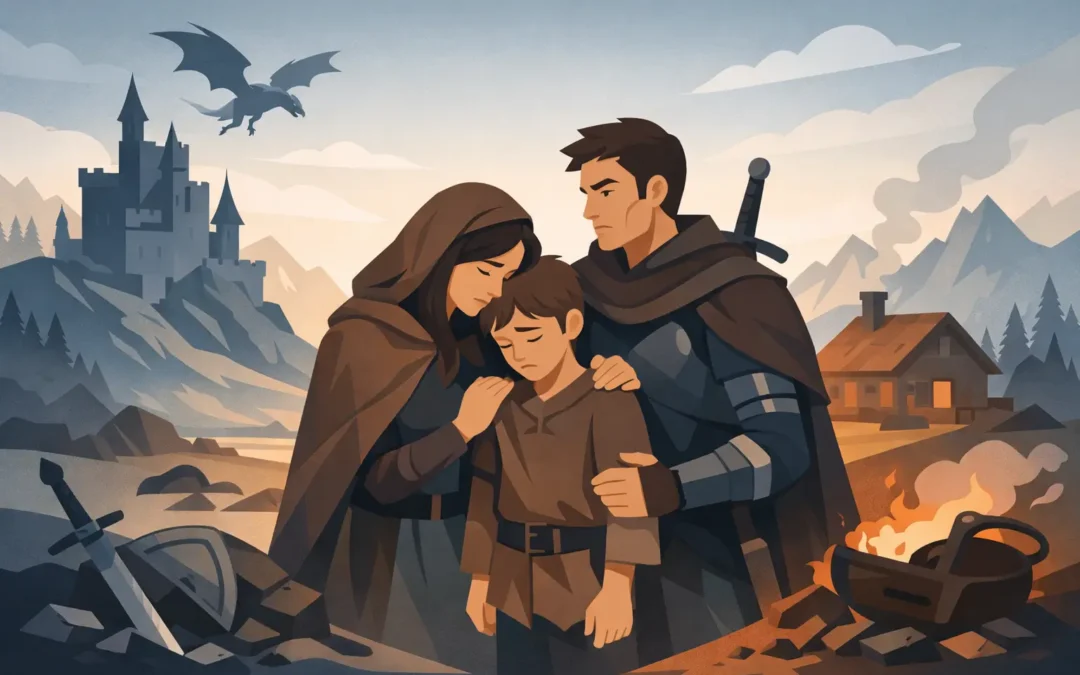
Some fantasy stories give readers dragons, spells, and hidden worlds. The ones that stay with us a little longer often give us something else too: families under strain, kids carrying more than they should, and a bit of magic that helps make hard feelings easier to face. That is why fantasy books about family hardship matter so much, especially for middle grade readers. They offer wonder, but they also tell the truth.
For children ages 8 to 12, and for the adults helping them choose books, this kind of story can be especially powerful. A fantasy novel can create enough distance for a reader to look at poverty, grief, separation, instability, or loneliness without feeling overwhelmed. The magic keeps the pages turning. The emotional honesty is what makes the story feel real.
Why fantasy books about family hardship resonate
When a child in a story is worried about eviction, a missing parent, a broken relationship, or not having enough, realism can hit close to home very fast. Fantasy softens that edge without weakening the feeling. A mysterious library, a talking creature, a hidden power, or a strange old house can hold the weight of real pain in a way that feels safe and hopeful.
That balance matters. Children do not need stories that pretend everything is easy. They also do not need stories that leave them stuck in sadness. The best fantasy books about family hardship make room for both struggle and possibility. They say, in effect, hard things are real, and you are not alone.
For parents, teachers, and librarians, these books often open up gentle conversations. A child may not want to talk directly about money worries or family conflict, but they might talk about what a character did when their world felt shaky. That is one of fantasy’s quiet gifts.
12 fantasy books about family hardship worth sharing
1. The Book Witch by K.L. Baxton
This is a natural place to begin for readers who want fantasy rooted in everyday struggles. The story blends magic with poverty, family instability, and the longing to find your place. What makes it stand out is its warmth. The hardship is real, but so is the hope. For middle grade readers who need a story that feels both imaginative and emotionally grounded, this is exactly the kind of book that can make them feel seen.
2. A Snicker of Magic by Natalie Lloyd
This novel carries a lovely sense of wonder, but underneath the whimsy is a family trying to hold itself together after loss and change. Felicity’s journey is full of heart, and the story understands that family hardship is not always loud. Sometimes it looks like restlessness, grief, and the fear of putting down roots again. It is tender, funny, and deeply comforting.
3. Where the Mountain Meets the Moon by Grace Lin
Minli’s family lives in poverty, and that struggle shapes everything at the start of the book. What follows is a quest filled with folklore, magic, and beautiful storytelling. The novel never loses sight of the family’s hardship, but it also refuses to define them only by lack. It is a wonderful choice for readers who love hopeful adventures with emotional depth.
4. The Girl Who Drank the Moon by Kelly Barnhill
This book moves through grief, misunderstanding, and the kind of wounds communities pass down over time. Family hardship here is tangled up with separation and sacrifice. It is more layered than some middle grade fantasy, so it may work best for strong readers or for reading aloud together. Still, its emotional payoff is remarkable.
5. Coraline by Neil Gaiman
Coraline is often remembered for its eerie charm, but part of its power comes from emotional neglect and the feeling of not quite being seen. The hardship is subtler than in some books on this list, yet it is there. Coraline’s bravery matters because the story understands what it feels like to want more from the people who are supposed to care for you.
6. The Jumbies by Tracey Baptiste
This story brings Caribbean folklore to life while also exploring loss, belonging, and the bond between a child and parent. Corinne is dealing with the absence of her mother, and that grief shapes how she understands danger and love. The fantasy elements are vivid and exciting, but the emotional core stays close to family.
7. The Witch’s Boy by Kelly Barnhill
Here, hardship comes through grief and the pressure that falls on a family after loss. Barnhill writes beautifully about loneliness, duty, and the aching wish to be understood. This one may appeal especially to readers who like their fantasy a little quieter and more reflective.
8. Breadcrumbs by Anne Ursu
At first glance, this is a snowy, magical tale inspired by fairy tale traditions. At its heart, though, it is also about a child trying to make sense of change, disconnection, and emotional pain. Family hardship is not the only focus, but the instability around Hazel gives the story real weight. It is thoughtful and best for readers who enjoy books that leave room for interpretation.
9. The Ogress and the Orphans by Kelly Barnhill
This novel looks at community hardship as much as family hardship, and that is part of what makes it special. Orphanhood, scarcity, blame, and fear run through the story, but so do generosity and care. It feels almost like a modern fairy tale, asking what happens when people stop looking out for one another and what it takes to rebuild trust.
10. Amari and the Night Brothers by B.B. Alston
Amari’s story has all the pace and excitement many young readers want, but her emotional situation matters just as much as the supernatural mystery. She is navigating loss, uncertainty, and the pressure of being underestimated. The book leans more toward action than some of the gentler titles here, which makes it a strong pick for readers who want fantasy that moves quickly without losing heart.
11. The Lost Library by Rebecca Stead and Wendy Mass
This book offers mystery, magic, and books at the center, which is already a winning combination for many middle grade readers. It also understands sadness, memory, and the ripple effects of what families carry. It is less heavy than some titles on this list, but that lighter touch may be exactly right for sensitive readers.
12. The Secret of Platform 13 by Eva Ibbotson
Ibbotson’s fantasy has humor and charm, yet it begins with a stolen child and a painful family separation. The book manages that emotional premise with a buoyant spirit, which is not easy to do. For readers who want hardship handled with a lighter hand, this is a strong choice.
How to choose fantasy books about family hardship for young readers
Not every child needs the same kind of book at the same time. That sounds obvious, but it is worth saying. One reader may be comforted by a story that mirrors their own life closely. Another may prefer more distance, where the magic takes center stage and the family hardship stays in the background.
Age range matters, but reading temperament matters too. Some books on this list are soft and reassuring. Others ask for more emotional stamina. If a child is already carrying a lot, the best book is not always the most intense one. Sometimes the right story is the one that offers just enough truth, wrapped in enough wonder, to help them breathe a little easier.
It can also help to think about what kind of hardship the story explores. Financial strain feels different from grief. Divorce feels different from neglect. Family instability feels different from the ache of wanting to belong. If you are choosing for a classroom, library display, or book club, that distinction can make the conversation more meaningful.
What these stories give readers beyond escape
People often talk about fantasy as escape, but that is only half the story. For many children, fantasy is not about leaving real life behind. It is about returning to real life with a little more courage. A child who sees a character survive uncertainty, speak up, ask for help, or discover inner strength may begin to imagine those possibilities for themselves.
That does not mean every book needs a neat, glittering ending. Some of the strongest stories leave a little mess around the edges, because real families are rarely simple. What matters is that the book offers movement toward hope, connection, or understanding.
That is what makes fantasy such a generous space for stories of hardship. It can hold shadows and wonder at the same time. It can let children face fear without facing it alone. And sometimes, for a reader who needs it, one magical story about a hurting family can feel like a lantern left on in the dark.