
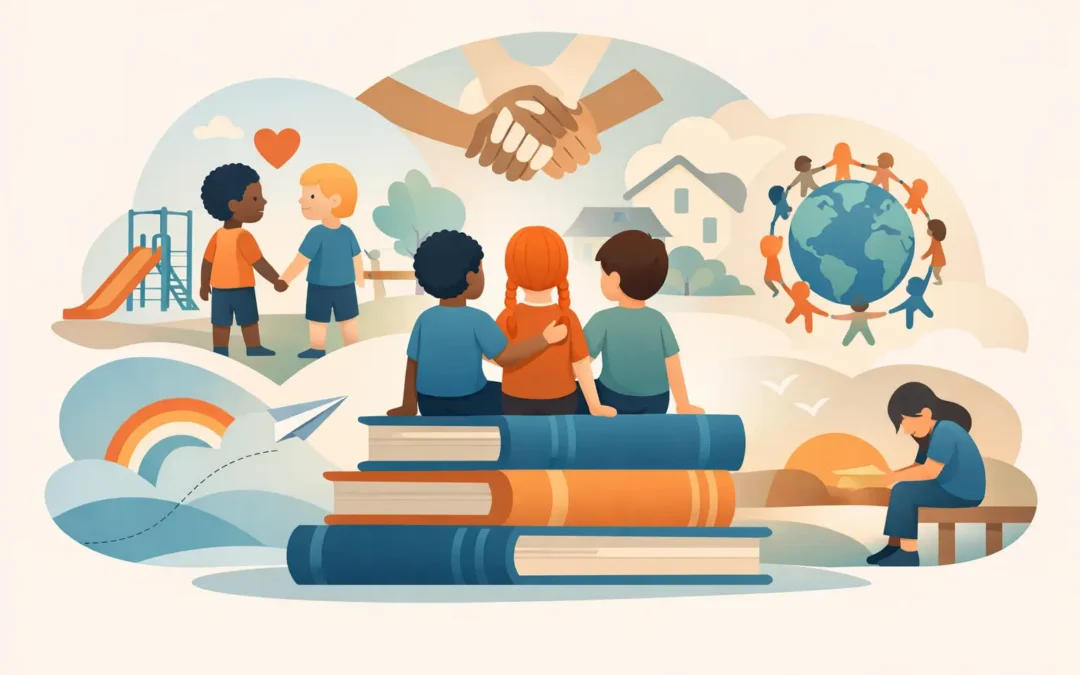
A child may not have words for housing insecurity, grief, loneliness, or feeling like the odd one out. But they recognize the feeling of a character worrying about a shutoff notice, sitting alone at lunch, or wishing their family could stay in one place. That is why social themes in kids books matter. They give young readers a safe, story-shaped way to meet difficult realities while holding on to the hope that hard moments can change.
For middle grade readers especially, books can become a private place to ask big questions. Why do some families have more than others? What makes a true friend? What do I do when I feel ashamed of something I cannot control? A meaningful story does not lecture children toward one correct answer. It lets them walk beside a character, feel the stakes, and come away with more compassion for themselves and others.
Why Social Themes in Kids Books Belong Beside Magic
Some adults worry that realistic social issues will make reading feel heavy. That can happen when a book treats its message like homework. But a well-told story makes room for both truth and wonder.
Magic, mystery, humor, adventure, and friendship can give readers breathing room. They can also help a child approach a painful subject from a little farther away. A magical library, a secret quest, or an impossible problem may feel safer to enter than a direct conversation about poverty or family instability. Once a reader is inside the story, the emotional truth can land with surprising power.
This is one reason fantasy and grounded realism work so well together in middle grade fiction. The fantastical elements invite curiosity. The real-life struggles give that curiosity a beating heart. In The Book Witch, magic and books create a sense of possibility while the characters face questions of belonging, hardship, and self-worth. Neither element cancels out the other. The wonder makes the difficult moments bearable, and the difficult moments make the wonder matter.
The Themes Children Notice, Even When Adults Look Away
Children are observant. They see who gets picked up in a new car, who cannot join an activity, who moves away suddenly, and who is treated as though they do not belong. They may not understand every reason behind what they see, but they understand unfairness, embarrassment, fear, and kindness.
Books can help name those experiences without reducing children to problems that need fixing. A character who lives with financial hardship should still get to be funny, brave, creative, stubborn, and loved. A child with an unstable home life should not exist only to teach another character a lesson. When authors make room for a whole person, readers learn to see whole people in their own communities.
Poverty and financial hardship
Stories about money need care. The goal is not to make hardship look charming or to ask readers to pity a family. It is to show the everyday choices and pressures that money can create: a missed field trip, a too-small coat, a parent working late, or the quiet fear of losing a home.
For a reader living through similar circumstances, that recognition can be deeply affirming. For a reader who has not, it can replace assumptions with empathy. The best stories also show dignity, resourcefulness, and connection, not just struggle.
Family change and instability
Families come in many shapes, and sometimes their shape changes without warning. Divorce, illness, incarceration, addiction, frequent moves, and conflict can all leave children feeling responsible for things they cannot control.
A book cannot solve those situations, but it can offer an essential message: what is happening around you is not the same as who you are. Characters who find trustworthy adults, build friendships, or ask for help can show readers that support may exist beyond the walls of their homes.
Friendship, belonging, and social pressure
For many middle grade readers, friendship is not a small theme. It is the center of the universe. A best friend’s silence, a group chat left unanswered, or a new student at school can feel enormous because belonging is enormous.
Stories can show that friendship is more than being included when things are easy. It asks for honesty, repair, courage, and sometimes the willingness to stand apart from the crowd. These lessons are more memorable when readers watch characters make mistakes, rather than when a narrator simply tells them what kindness looks like.
What Makes a Theme Feel Honest Instead of Heavy-Handed?
Children can sense when a story is trying too hard to teach them. Honest social themes grow from character, conflict, and consequence. They are part of what the protagonist wants, fears, and must learn to face.
A child who is embarrassed by their family’s finances may push away a friend who offers help. A character desperate to fit in may make a choice that hurts someone else. These moments create real tension because there is no easy villain to blame. Readers can understand why someone acted badly without being asked to excuse the harm.
Hope matters here, but hope is not the same as a tidy ending. Not every family problem can be fixed by the last chapter. Not every friendship returns to what it was. A hopeful ending may simply mean a character has found their voice, accepted help, or realized they deserve better than the story they have been telling themselves.
That balance is especially valuable for readers ages 8 to 12. They are ready for emotional complexity, but they still need to feel that courage and care can make a difference. The story does not have to promise that everything will be easy. It should leave a small light on.
Choosing Books With Social Themes for Young Readers
Parents, teachers, and librarians often look for books that open meaningful conversations. The right choice depends on the child. One reader may be ready for a direct, realistic story about a difficult family situation. Another may connect more easily through fantasy, humor, or a mystery that carries the theme beneath the surface.
Consider the reader’s temperament and current circumstances, not only their age. A child who has experienced a recent loss may need a book that feels gentle and companionable. Another may want a story that is bolder, funnier, or more action-filled. There is no single correct level of intensity.
It also helps to look for stories where the social theme is not the character’s entire identity. Seek books with agency. Does the young protagonist make choices? Do they have interests, flaws, dreams, and moments of joy? Are there adults who are complicated but believable, rather than perfect rescuers or cartoon villains?
After reading, a simple question can go further than a formal lesson: “What part of that character’s problem felt hardest?” Younger readers may want to talk right away. Others may shrug, change the subject, and return days later with a thought that has been quietly growing. Let the book do some of its work in silence.
Stories Can Build a Wider Circle
The lasting gift of socially meaningful fiction is not that it turns every child into an expert on hardship. It helps them practice noticing. A reader may become gentler with the classmate who never brings lunch money, more patient with a friend whose home life feels unpredictable, or less ashamed of their own family’s struggles.
Just as importantly, these books remind children that they are not alone in feelings that can seem impossible to explain. Somewhere, a character has worried, hoped, made a mess, found a friend, and kept going. For a young reader, that recognition can feel a little like finding a light in a dark hallway – not a promise that the hallway disappears, but a reason to take the next step.